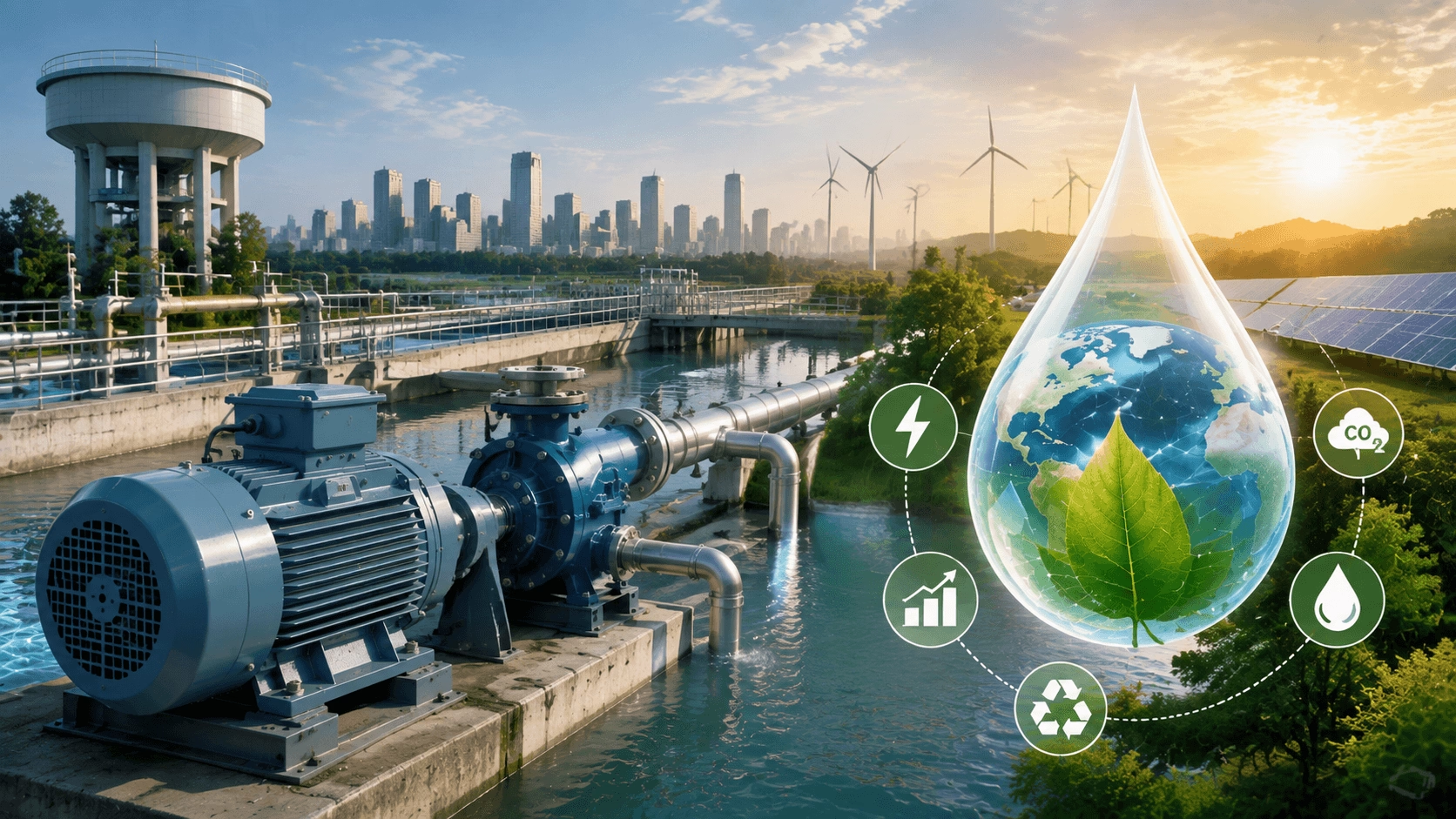
The Water-Energy Nexus: Carbon Footprint of Water Infrastructure
Abstract: An in-depth analysis of the critical interdependence between water and energy systems. This article examines the embedded energy within water infrastructure, the dominant role of pumping systems in carbon emissions, and strategic pathways toward decoupling water delivery from energy consumption through efficiency, digitalization, and regulatory compliance.
1. Introduction: Two Crises, One Integrated Solution
Global society confronts two simultaneous existential challenges: water scarcity and climate change. While frequently addressed as separate policy domains, these issues are fundamentally interconnected through the Water-Energy Nexus.
Energy is required to extract, treat, and distribute water. Conversely, water is essential for energy generation, including thermal power plant cooling and hydroelectric production. Understanding this symbiotic relationship is critical for developing sustainable infrastructure strategies that address both resource constraints simultaneously.
2. The Embedded Energy of Water
Water delivery is an energy-intensive industrial process. Every stage of the water lifecycle demands significant power input:
- Extraction: Pumping groundwater from deep aquifers or lifting surface water requires substantial electrical energy.
- Treatment: Chemical dosing, membrane filtration, UV disinfection, and aeration processes are inherently energy-intensive.
- Distribution: Transporting water across municipal networks, particularly against elevation gradients, necessitates high-capacity pumping stations.
- Wastewater Management: Collection, biological treatment, and sludge processing often consume more energy per unit volume than potable water supply.
- End-Use Thermal Energy: Domestic and industrial water heating represents a major secondary energy demand.
Key Statistic: In many regions, the water sector accounts for up to 15% of total national electricity consumption, making it one of the largest single industrial energy users.
3. Pumping Systems: The Dominant Energy Consumer
Within water infrastructure, pumping systems represent the primary opportunity for energy optimization.
- Electricity Share: Pumps typically account for 80–90% of a water treatment facility’s total electricity consumption.
- Systemic Inefficiency: Many existing installations operate well below optimal efficiency due to aging equipment, improper sizing, throttling losses, and absence of variable speed control.
- Decarbonization Leverage: Upgrading pumping technology offers one of the fastest returns on investment for both cost reduction and carbon mitigation in the water sector.
4. Quantifying the Carbon Footprint
Energy consumption in water infrastructure translates directly to greenhouse gas emissions, modulated by the local grid emission factor.
Emission Categories
| Type | Source | Mitigation Strategy |
|---|---|---|
| Direct (Scope 1) | Diesel/petrol-powered pumps in off-grid locations | Electrification; solar-hybrid systems |
| Indirect (Scope 2) | Grid-supplied electric motors | Efficiency upgrades; renewable procurement |
| Embodied (Scope 3) | Manufacturing, installation, end-of-life | Lifecycle assessment; circular design |
Impact Metric: A 10% reduction in pumping energy consumption typically yields a proportional decrease in facility-level carbon emissions, contributing measurably to national climate targets.
5. Regulatory Framework and Efficiency Standards
Governments worldwide are codifying the nexus through mandatory performance standards:
- Motor Standards: Minimum Efficiency Performance Standards (MEPS) mandating IE3/IE4 classes compel manufacturers to eliminate wasteful designs.
- Pump Standards: Emerging Pump Energy Index (PEI) regulations extend efficiency requirements beyond motors to complete pump assemblies.
- Green Building Certifications: LEED, BREEAM, and similar frameworks award credits for integrated water-energy efficiency, driving market adoption.
- Carbon Pricing: Expanding carbon taxes and cap-and-trade systems internalize the environmental cost of inefficient water operations.
6. Strategies for Decoupling Water from Energy
The strategic objective is to decouple water service delivery from energy intensity—providing equal or greater water security with progressively lower energy input.
6.1 Variable Speed Drive (VFD) Integration
Matching pump speed to real-time demand via VFDs exploits the cubic relationship between speed and power (P \propto N^3), eliminating throttling losses and reducing energy consumption by 20–50% in variable-demand applications.
6.2 Gravity-Fed System Design
Where topography permits, gravity distribution eliminates pumping energy entirely. Strategic reservoir placement and pressure zone optimization maximize gravitational potential.
6.3 Non-Revenue Water Reduction
Treating and pumping water lost through leaks represents pure energy waste. Active leak detection and pipe rehabilitation simultaneously conserve water and reduce embedded energy.
6.4 Renewable Energy Integration
Solar PV-powered pumping systems are increasingly viable for remote irrigation and rural water supply, eliminating grid dependency and Scope 2 emissions.
7. Future Directions: Smart Water Networks
Digital transformation enables unprecedented optimization of the water-energy nexus:
- Real-Time Monitoring: IoT sensor networks detect inefficiencies, leaks, and anomalies instantaneously.
- Predictive Control: AI-driven algorithms optimize pump scheduling based on electricity tariffs, demand forecasts, and renewable availability.
- Energy Recovery: In-pipe micro-hydro turbines and wastewater heat recovery systems capture otherwise wasted energy.
- Digital Twins: Virtual replicas enable scenario modeling for continuous system optimization without operational risk.
8. Conclusion
The Water-Energy Nexus demonstrates that saving water is saving energy, and saving energy is saving water. As global demand for both resources intensifies under population growth and climate stress, optimizing infrastructure efficiency transcends economic rationale—it becomes an environmental and social imperative.
Engineers, operators, and policymakers must adopt integrated resource planning that treats water and energy as a unified system. Only through this holistic approach can we build resilient, low-carbon infrastructure capable of sustaining future generations.
Build Sustainable Water & Energy Systems
TITECHO provides IE4 super-premium efficiency motors and optimized pumping solutions designed to minimize the carbon footprint of water infrastructure.
- Explore High-Efficiency Solutions: www.cntecho.com
- Consult Our Sustainability Engineering Team: [email protected]