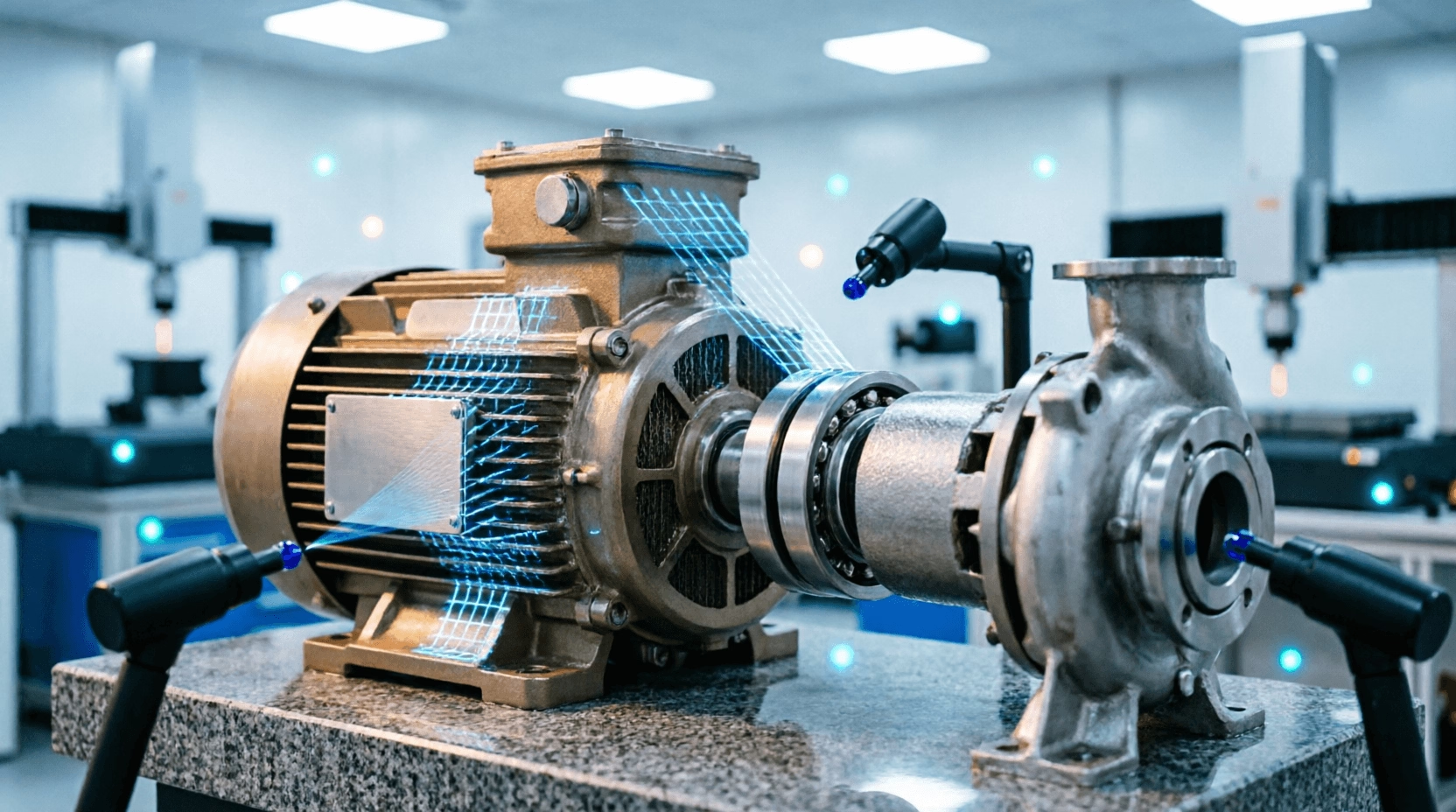
A Comprehensive Compliance Framework: International Safety Standards, Performance Testing Protocols, Documentation Requirements, and Supplier Qualification Best Practices for Industrial Fluid Handling Equipment
In the globalized industrial supply chain, regulatory compliance is no longer a peripheral administrative task—it is a fundamental determinant of market access, liability management, and commercial viability. For motors and pumps, adherence to international safety, performance, and environmental standards serves as the universal language of trust between manufacturers, distributors, and end-users. Non-compliance risks customs seizure, project delays, insurance invalidation, and reputational damage. Conversely, robust certification portfolios accelerate procurement cycles, reduce buyer due diligence burdens, and signal manufacturing maturity.
This guide provides a structured overview of critical certifications, testing methodologies, documentation expectations, and supplier evaluation criteria essential for navigating the complex regulatory landscape governing electric motors and industrial pumps in 2026.
1. Why Compliance Matters: Strategic and Operational Imperatives
Market Access and Customs Clearance
Regulatory marks (CE, UL, CCC, etc.) are frequently mandatory prerequisites for importation and sale. Absence of valid certification can result in shipment rejection at borders, forced re-export, or destruction of goods. In regulated sectors such as oil & gas, mining, and municipal water, compliance is contractually enforced through vendor prequalification lists.
Risk Mitigation and Liability Protection
Certified equipment demonstrates conformity with recognized safety benchmarks, reducing exposure to product liability claims, workplace accidents, and insurance disputes. In litigation scenarios, documented compliance with applicable standards serves as primary evidence of due care and reasonable engineering practice.
Procurement Efficiency and Vendor Qualification
Buyers increasingly mandate specific certifications as pass/fail criteria in RFQs. Suppliers with comprehensive, readily available compliance documentation shorten technical evaluation timelines by weeks or months. Pre-validated products eliminate redundant third-party testing costs for buyers.
Energy Efficiency and Sustainability Mandates
Global energy regulations (EU Ecodesign, US DOE, China GB) tie minimum efficiency levels to market legality. Compliance with IE-class standards and regional labeling schemes is now inseparable from basic product eligibility. Failure to meet evolving efficiency thresholds renders otherwise functional equipment commercially obsolete.
Environmental and Chemical Compliance
RoHS, REACH, and PFAS restrictions govern material composition. Non-compliant components can trigger recalls, fines, and exclusion from environmentally sensitive markets. Full material traceability is increasingly demanded across automotive, food processing, and pharmaceutical supply chains.
2. Key Certifications and Standards Matrix
European Economic Area: CE Marking Framework
The CE mark signifies conformity with all applicable EU directives and regulations. It is self-declared by the manufacturer but must be supported by complete technical documentation.
| Directive/Regulation | Scope | Key Harmonized Standards |
|---|---|---|
| Low Voltage Directive (LVD) 2014/35/EU | Electrical safety for equipment 50–1000 VAC | EN 60034-1, EN 60204-1 |
| Machinery Directive 2006/42/EC | Mechanical safety, guarding, risk assessment | EN ISO 12100, EN 809 |
| EMC Directive 2014/30/EU | Electromagnetic compatibility | EN 60034-18-41, EN 61000-6 series |
| ATEX Directive 2014/34/EU | Equipment for explosive atmospheres | EN 60079 series |
| Ecodesign Regulation (EU) 2019/1781 | Minimum energy efficiency for motors | IEC 60034-30-1 (IE classes) |
| RoHS Directive 2011/65/EU | Restriction of hazardous substances | EN IEC 62321 series |
Critical Note: CE marking is not a quality mark—it is a legal declaration of regulatory conformity. The Declaration of Conformity (DoC) must reference specific harmonized standards and be retained for 10 years post-manufacture.
International Electrotechnical Commission (IEC) Standards
IEC standards form the technical foundation for most national certifications and facilitate mutual recognition.
- IEC 60034 Series: Rotating electrical machines. Part 1 (rating/performance), Part 2-1 (efficiency testing), Part 30-1 (IE classification), Part 14 (vibration), Part 18 (insulation qualification).
- IEC 60079 Series: Explosive atmospheres. Equipment protection levels (Ex d, Ex e, Ex nA), temperature classification, area classification.
- IEC 60529: Degrees of protection provided by enclosures (IP code system).
- IEC 61800 Series: Adjustable speed electrical power drive systems (VFD compatibility, EMC, safety).
North American Safety Approvals: UL and CSA
Unlike CE self-declaration, UL and CSA certifications require third-party testing and ongoing factory surveillance by Nationally Recognized Testing Laboratories (NRTLs).
- UL 1004: Standard for motors; covers construction, insulation, thermal protection, and dielectric testing.
- UL 778: Motor-operated water pumps; addresses hydraulic integrity, seal leakage, and electrical safety under wet conditions.
- CSA C22.2 No. 100 / No. 108: Canadian equivalents aligned with UL requirements.
- UL Listing vs. UL Recognition: Listed products are evaluated as complete end-use equipment; Recognized Components are intended for incorporation into larger assemblies. Buyers must verify which applies to their application.
Pump-Specific Performance Standards
- ISO 9906: Rotodynamic pump acceptance tests. Defines Grade 1 (precision), Grade 2 (standard), and Grade 3 (basic) test tolerances for head, flow, power, and efficiency measurement.
- ISO 5199: Technical specifications for centrifugal pumps (Class II). Covers design pressure, materials, shaft sealing, and baseplate requirements.
- API 610: Centrifugal pumps for petroleum, petrochemical, and natural gas industries. More stringent than ISO 5199; mandates specific metallurgies, bearing L10 life, and NPSH margins.
- ANSI/HI Standards: Hydraulic Institute standards covering pump nomenclature, testing, installation, and application guidelines widely referenced in North America.
Hazardous Area Certifications
Equipment for explosive atmospheres requires specialized certification beyond standard safety marks.
| Certification Scheme | Geographic Scope | Governing Body |
|---|---|---|
| ATEX | European Union | Notified Bodies (e.g., TÜV, SGS, Bureau Veritas) |
| IECEx | International (mutual recognition) | IECEx Management Committee |
| NEC/CEC Class-Division | United States / Canada | NRTLs (UL, CSA, FM Approvals) |
| INMETRO | Brazil | Brazilian National Institute of Metrology |
| TR CU 012/2011 | Eurasian Economic Union | Accredited Russian/Belarusian/Kazakh bodies |
Advisory: ATEX and IECEx certificates are not interchangeable with North American Class-Division approvals despite similar protection concepts. Dual certification is required for equipment serving both markets. Always verify certificate validity through issuing body databases.
Energy Efficiency Regulatory Frameworks
| Region | Regulation | Current Minimum (2026) | Notes |
|---|---|---|---|
| European Union | Ecodesign (EU) 2019/1781 | IE3 (≥0.75 kW); IE4 for certain sizes | Includes VFD-driven motors |
| United States | DOE 10 CFR 431 | Premium Efficiency (IE3 equivalent) | Expanded scope in recent rulemakings |
| China | GB 18613-2020 | IE3 | Mandatory for domestic sale and import |
| India | BIS IS 12615 | IE2/IE3 depending on rating | Phased implementation |
| Australia/NZ | MEPS | IE3 | Aligned with IEC 60034-30-1 |
3. Documentation and Traceability Requirements
Professional buyers expect comprehensive, auditable documentation packages. Incomplete records are treated as non-conformances during vendor qualification.
Essential Compliance Documents
- Declaration of Conformity (DoC): Signed statement referencing applicable directives and harmonized standards; includes product identification, manufacturer details, and notified body number (if applicable).
- Test Reports: Third-party or in-house laboratory reports per relevant standards (IEC 60034-2-1 efficiency, ISO 9906 hydraulic performance, IP ingress testing, dielectric withstand). Must include test date, equipment calibration status, and raw data.
- Material Certificates: Mill certificates (EN 10204 Type 3.1/3.2) for metallic components; REACH/RoHS declarations for all materials; elastomer compatibility statements for seals.
- Installation and Operation Manuals: Multilingual documentation covering safe installation, commissioning, maintenance intervals, troubleshooting, and disposal instructions per Machinery Directive Annex I.
- Technical File / Design Dossier: Compiled evidence supporting DoC including drawings, calculations, risk assessments, component certifications, and test summaries. Retained for minimum 10 years.
- ATEX/IECEx Certificates: Valid certificates with schedule listing approved variants; Quality Assurance Notification (QAN) for manufacturing site.
Component Traceability Systems
Robust traceability enables rapid root cause analysis, targeted recalls, and warranty validation.
- Batch/Lot Tracking: Bearings, windings, seals, and castings traced from supplier receipt through final assembly.
- Serial Number Linkage: Each unit’s serial number linked to production date, test results, component batches, and shipping destination.
- Supplier Qualification Records: Approved vendor lists with audit history, incoming inspection data, and corrective action logs.
- Digital Record Retention: Cloud-based QMS platforms enabling instant document retrieval versus paper archives vulnerable to loss or degradation.
4. Testing Protocols and Factory Audit Expectations
Type Testing vs. Routine Testing
- Type Tests: Comprehensive validation performed on representative samples when design changes occur or periodically (typically every 3–5 years). Includes full thermal, endurance, IP, EMC, and safety evaluations.
- Routine Tests: 100% production line verification including winding resistance, hi-pot dielectric, no-load current, vibration, and rotation direction. Results recorded per unit.
- Acceptance Tests: Customer-witnessed or third-party verified performance testing per ISO 9906 Grade 1 or 2, typically specified for large or critical pumps.
Independent Laboratory Verification
Third-party testing adds credibility unattainable through self-testing alone. Recognized laboratories include TÜV SÜD, SGS, Intertek, Bureau Veritas, UL Solutions, and CSA Group. Buyers should verify lab accreditation (ISO/IEC 17025) and scope coverage before accepting reports.
Factory Audit Criteria
Serious buyers conduct or commission supplier audits evaluating:
- Quality Management System: ISO 9001 certification is baseline; IATF 16949 for automotive; API Q1 for oil & gas.
- Process Control: Statistical process control (SPC) on critical dimensions; calibrated test equipment with valid certificates; defined work instructions.
- Incoming Material Control: Supplier qualification procedures; incoming inspection sampling plans; non-conformance handling.
- Production Environment: Cleanliness, ESD controls (for electronics), storage conditions for hygroscopic materials.
- Corrective Action Effectiveness: Evidence of closed-loop CAPA processes; trend analysis of defects; customer complaint resolution timeliness.
- Documentation Integrity: Change control procedures; revision management; record retention compliance.
Suppliers that proactively share audit summaries, welcome unannounced visits, and maintain transparent quality metrics significantly reduce buyer qualification effort and perceived risk.
5. Regulatory Evolution and Proactive Compliance Management
Dynamic Regulatory Landscape
Standards and regulations are not static. Key 2026 developments include:
- Expanded Ecodesign Scope: EU proposals extending efficiency requirements to smaller motors, integrated motor-pump units, and repairability criteria.
- PFAS Restrictions: Emerging bans on per- and polyfluoroalkyl substances affecting seal materials, wire insulation, and coatings. Affected suppliers must validate alternative material qualifications.
- Cybersecurity Requirements: IEC 62443 alignment increasingly expected for smart/IoT-enabled pumps and drives in critical infrastructure.
- Carbon Border Adjustments: EU CBAM and similar mechanisms linking import duties to embedded emissions; lifecycle assessment documentation becoming commercially relevant.
- Updated Hazardous Area Standards: IEC 60079 revisions incorporating new protection concepts and digital device requirements.
Supplier Responsiveness as Selection Criterion
Buyers should evaluate suppliers’ regulatory intelligence capabilities:
- Dedicated compliance personnel monitoring standard committee activities and regulatory gazettes.
- Documented product roadmap showing planned compliance upgrades aligned with regulatory timelines.
- Proactive customer notifications of impending changes affecting existing orders or installed base.
- Willingness to co-invest in certification for strategic partnerships.
Reactive suppliers who discover compliance gaps only after customer inquiry represent unacceptable supply chain risk in regulated markets.
6. Supplier Selection: Certification Competency Evaluation Framework
When qualifying motor and pump suppliers, use this structured assessment matrix:
| Evaluation Dimension | Minimum Acceptable | Preferred / Best-in-Class |
|---|---|---|
| Certification Scope | CE + one major market (UL or CCC) | Multi-market (CE, UL, CSA, CCC, INMETRO, EAC) + ATEX/IECEx |
| Test Lab Capability | Routine testing in-house; type tests outsourced | ISO 17025 accredited in-house lab; witnessed testing capability |
| QMS Certification | ISO 9001 | ISO 9001 + sector-specific (API Q1, IATF 16949, AS9100) |
| Documentation Response Time | ≤10 business days | ≤3 business days; online portal access |
| Traceability Depth | Serial number to production batch | Component-level lot tracking with digital records |
| Regulatory Intelligence | Reactive updates | Proactive roadmaps; standards committee participation |
| Audit Transparency | Scheduled audits only | Unannounced audits welcomed; real-time quality dashboards |
| M&V Support | Basic test reports | Detailed Measurement & Verification plans; third-party witness coordination |
Procurement Advisory: Lowest unit cost frequently correlates with incomplete certification, inadequate testing, or poor documentation. Total landed cost including compliance remediation, delayed shipments, and field failures often exceeds premium for fully compliant supply. Always request and verify documentation before purchase order placement.
7. TECHO Electrical & Mechanical: Certified Compliance as Standard Practice
TECHO Electrical & Mechanical (Taizhou) Co., Ltd. maintains comprehensive certification portfolios across our motor and pump product ranges, reflecting our commitment to global market readiness and customer risk reduction.
Our Compliance Capabilities
- Multi-Market Certifications: CE (LVD, MD, EMC, Ecodesign), UL/CSA listings, CCC, and regional approvals maintained through active surveillance programs.
- Performance Validation: ISO 9906 Grade 2 hydraulic testing and IEC 60034-2-1 efficiency verification on production units; type test reports available upon request.
- Hazardous Area Expertise: ATEX and IECEx certified product lines for Zone 1/Zone 2 applications with valid QAN documentation.
- Complete Documentation Packages: Declarations of Conformity, test reports, material certificates, and technical files provided proactively with quotations or within 48 hours of request.
- Transparent Quality Systems: ISO 9001 certified manufacturing with full component traceability; customer audits welcomed and facilitated.
- Regulatory Vigilance: Dedicated compliance team monitoring evolving standards; product updates communicated proactively to affected customers.
Request Compliance Documentation
Access current certificates, test reports, and conformity declarations for any TECHO product line. Our engineering and compliance teams stand ready to support your vendor qualification, project specification, and regulatory submission requirements.
Visit www.cntecho.com to submit documentation requests, schedule factory audits, or discuss custom certification requirements for your target markets.
Disclaimer: Regulatory requirements vary by jurisdiction, application, and equipment configuration. This guide provides general informational overview and does not constitute legal or regulatory advice. Always verify specific compliance obligations with qualified professionals and relevant authorities. Certifications and standards referenced are subject to revision; confirm current versions with issuing bodies.