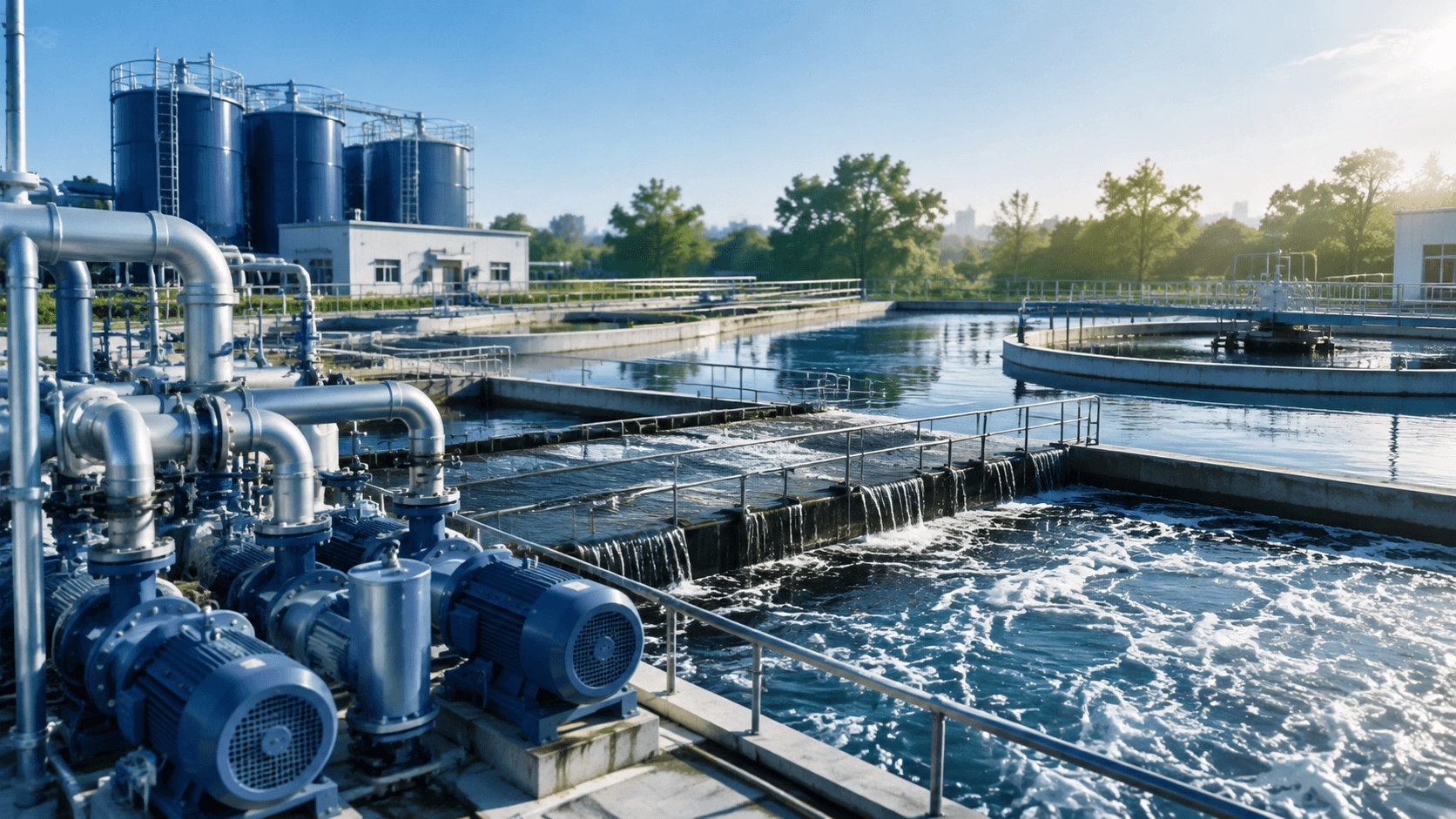
The Ultimate Guide to Modern Water Treatment Systems: Efficiency, Technology & Sustainability | TITECHO
Abstract: A comprehensive guide to modern water treatment infrastructure, covering core process engineering, industrial wastewater challenges, and pumping technology optimization. This document explores how premium-efficiency motors, advanced materials, and smart systems drive sustainability and operational cost reduction. TITECHO provides engineered solutions for the next generation of water treatment facilities.
Introduction: The Invisible Infrastructure of Civilization
Water is fundamental to civilization, yet the complex networks that purify, distribute, and recycle it remain largely unseen. Behind every tap lies an intricate system of tanks, filters, and machinery ensuring safety and availability. However, as global water scarcity intensifies and energy costs escalate, the industry focus is shifting from mere functionality to efficiency, sustainability, and intelligent operation.
For industrial facility managers and engineering professionals, the challenge is twofold: meet stringent environmental regulations while minimizing operational expenditures. At the heart of this challenge lies the pumping system. Industry data indicates that pumps account for nearly 90% of electricity consumption in water treatment facilities.
This guide explores the evolving landscape of water treatment systems, delving into core processes, industrial wastewater engineering challenges, and technological innovations driving next-generation efficiency. Whether designing a new plant or optimizing existing infrastructure, these insights support informed decision-making.
1. Core Process Engineering: Beyond Filtration
Modern water treatment is a multi-stage engineering discipline. Understanding each stage is essential for appropriate equipment selection.
1.1 Coagulation and Flocculation
Treatment begins with chemical conditioning. Coagulants neutralize charged particles, enabling them to aggregate into "floc" for subsequent removal.
- Equipment Requirement: Precision metering pumps are critical. Inaccurate dosing results in either chemical waste or inadequate water quality.
1.2 Sedimentation and Filtration
Gravity separation removes settled solids, followed by passage through sand, activated carbon, or membrane media.
- Equipment Requirement: High-pressure pumps must maintain consistent flow through dense filter media without inducing cavitation or excessive energy consumption.
1.3 Disinfection
The final pathogen barrier employs chlorine, UV irradiation, or ozone treatment.
- Equipment Requirement: Circulation pumps ensure uniform disinfectant distribution throughout contact basins and reservoirs.
Critical Insight: Every treatment stage depends on reliable fluid movement. Pump failure halts the entire process; reliability is an operational necessity, not a luxury.
2. Industrial Wastewater Challenges: Managing Harsh Conditions
While municipal treatment prioritizes consistency, industrial wastewater presents volatile and aggressive conditions. Textile, chemical, food processing, and metalworking effluents are frequently corrosive, abrasive, and toxic.
2.1 Corrosion Resistance
Acidic or alkaline fluids can degrade standard cast iron pumps within months.
- Engineering Solution: Material selection is paramount. Stainless Steel 316, Duplex Steel, or engineered polymers (PP/PVDF) are essential for chemical compatibility and longevity.
- TITECHO Capability: Our industrial pump series offers customizable material configurations matched to specific chemical profiles, ensuring extended service life.
2.2 Solids Handling
Industrial waste streams often contain rags, plastics, and sludge that clog conventional impellers.
- Engineering Solution: Vortex impellers or grinder pumps macerate solids prior to transfer. Enlarged passageways prevent blockages.
- Operational Impact: Reduced clogging frequency directly decreases maintenance downtime and labor costs.
2.3 Seal Integrity and Containment
Leakage of hazardous fluids poses significant environmental and safety risks.
- Engineering Solution: Double mechanical seals with leak detection or sealless magnetic drive pumps eliminate fugitive emissions and ensure containment integrity.
3. The Efficiency Revolution: Reducing Cost and Carbon
The most significant trend in water treatment is energy optimization rather than novel chemistry. With global energy price volatility, efficiency improvements deliver the fastest return on investment.
3.1 Premium Efficiency Motors
The motor is the primary energy consumer in any pump system. Upgrading from standard (IE1/IE2) to Premium Efficiency (IE3/IE4) yields immediate and sustained savings.
| Motor Class | Efficiency Level | Application Status |
|---|---|---|
| IE2 | High Efficiency | Legacy systems; being phased out in regulated markets |
| IE3 | Premium Efficiency | Current global minimum standard for new installations |
| IE4 | Super Premium | Recommended for continuous-duty applications; maximum ROI |
Economic Impact: For a 15 kW pump operating continuously, upgrading from IE2 to IE4 can save over $1,000 annually. Over a 10-year lifespan, cumulative energy savings typically exceed the motor's initial purchase price by a factor of five.
3.2 Variable Frequency Drive (VFD) Integration
Water demand is inherently variable. Traditional systems operate pumps at full speed and throttle flow via valves—analogous to driving with simultaneous acceleration and braking.
- VFD Solution: Modulates motor speed to match real-time demand precisely.
- Affinity Law Application: Reducing pump speed by 20% reduces power consumption by approximately 50% (P ∝ N³).
- TITECHO Compatibility: All premium-efficiency motors feature enhanced insulation systems designed to withstand VFD-induced voltage stress.
3.3 Smart Monitoring and IoT Integration
- Predictive Maintenance: Detect bearing degradation and seal wear before catastrophic failure.
- Remote Optimization: Adjust pump parameters from centralized control systems.
- Data Analytics: Identify system curve inefficiencies and optimize operating points continuously.
4. Strategic Selection Checklist for Engineers
Selecting the optimal pumping system requires a holistic engineering approach:
- Define Fluid Characteristics: Clean water, sewage, or corrosive chemical? (Determines material specification)
- Calculate Flow & Head Requirements: Peak and average duty points? (Determines pump sizing)
- Verify NPSH Margin: Adequate suction pressure to prevent cavitation? (Determines installation geometry)
- Evaluate BEP Proximity: Does normal operation fall near Best Efficiency Point? (Determines OPEX and reliability)
- Confirm Regulatory Compliance: Meets local IE3/IE4 standards? (Determines legal eligibility)
- Assess Support Infrastructure: Global spare parts and technical support availability? (Determines long-term risk)
5. Case Study: Retrofitting for Sustainability
Client: Mid-sized chemical processing plant, Southeast Asia
Challenge: Escalating energy costs and frequent pump failures due to corrosion.
Solution Implemented:
- Replaced 12 standard motors with TITECHO IE4 Premium Efficiency Motors.
- Installed Stainless Steel 316 centrifugal pumps for corrosive service lines.
- Integrated VFDs on main circulation pumps.
Results (12-Month Post-Retrofit):
- ✅ Energy Consumption: Reduced by 32%
- ✅ Maintenance Costs: Reduced by 60%
- ✅ Payback Period: 18 months
- ✅ Regulatory Compliance: Fully met updated environmental discharge standards
6. Future Outlook: Zero Liquid Discharge (ZLD)
As regulatory frameworks tighten, the industry is advancing toward Zero Liquid Discharge (ZLD), where all wastewater is recovered and reused. ZLD processes require high-pressure pumps for Reverse Osmosis (RO) and mechanical vapor recompression evaporators.
TITECHO is actively developing high-pressure multi-stage pumps specifically engineered for ZLD applications, enabling industries to close the water loop and achieve true circular sustainability.
Conclusion: Partnering for a Sustainable Future
Water treatment has evolved from compliance-driven utility to strategic resource management. Today's pumping technology decisions will define operational costs and environmental impact for the next decade.
TITECHO serves as an engineering partner, not merely a manufacturer. From IE4 motors that minimize energy expenditure to corrosion-resistant pumps that endure harsh chemical environments, our solutions are engineered to power the future of sustainable water treatment.
Frequently Asked Questions (FAQ)
Q: What are the recommended maintenance intervals for water treatment pumps?
A: Quarterly inspections are generally recommended. However, with TITECHO’s premium bearings and seals, condition-based monitoring can safely extend maintenance intervals.
Q: What advantage do IE4 motors offer over IE3?
A: IE4 motors provide approximately 15–25% lower losses compared to IE2 and measurable savings over IE3, particularly in continuous-duty water treatment applications where annual operating hours are high.
Q: Can TITECHO pumps handle seawater applications?
A: Yes. We offer dedicated configurations using Stainless Steel 316, Duplex 2205, or Bronze materials engineered specifically for high-chloride marine environments.
Q: Are your motors compatible with Variable Frequency Drives?
A: All TITECHO premium-efficiency motors feature enhanced insulation systems designed to withstand VFD voltage spikes and dv/dt stresses, ensuring reliable variable-speed operation.
Ready to Optimize Your Water Treatment System?
- Download Water Treatment Catalog: www.cntecho.com
- Consult Our Engineering Team: [email protected]