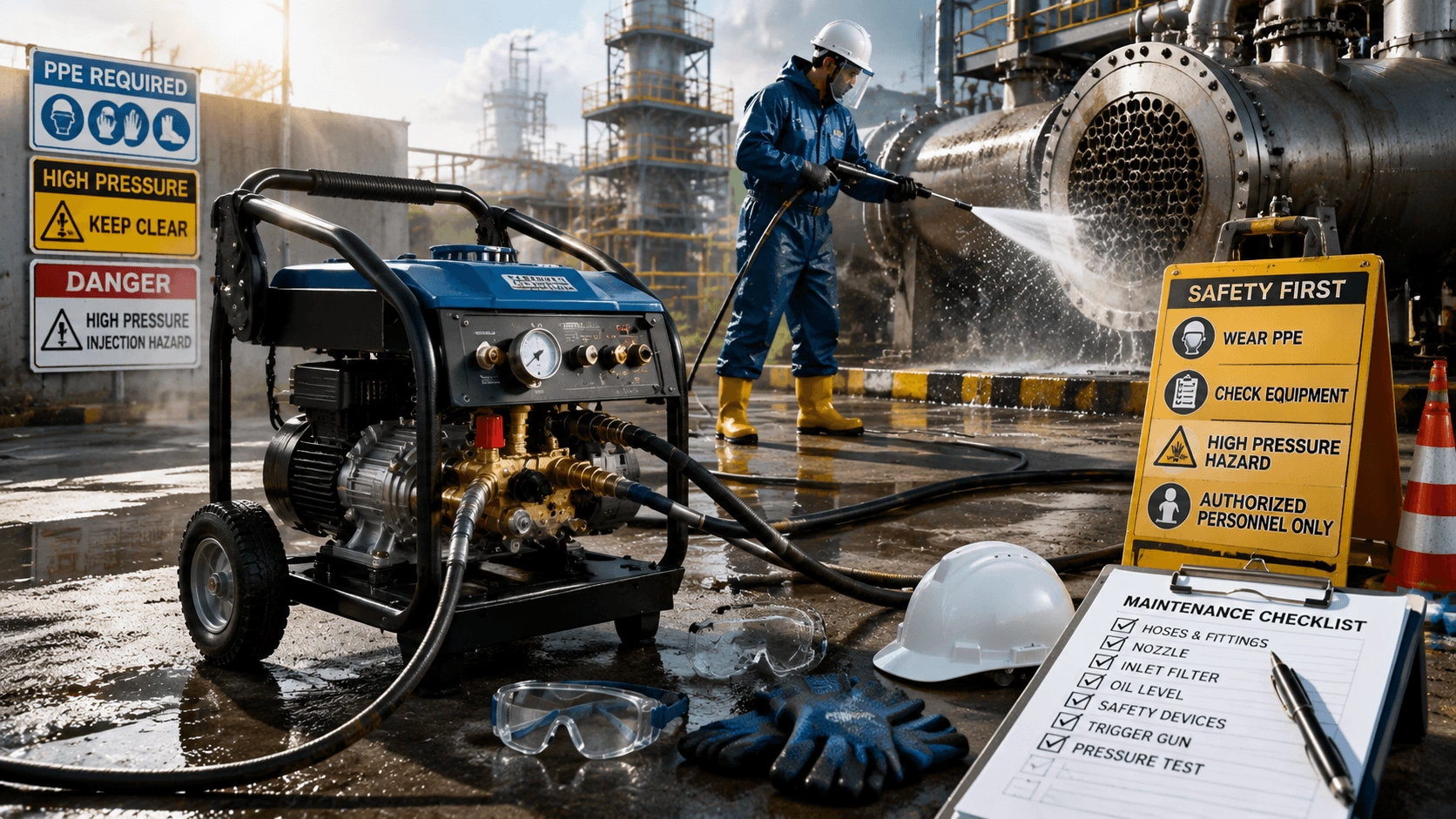
Ensuring Operational Safety and Longevity in High-Pressure Cleaning Applications
A comprehensive technical guide to operational safety protocols, preventive maintenance strategies, and environmental compliance for industrial high-pressure cleaning systems. Essential reference for facility managers, safety officers, and maintenance teams seeking to maximize equipment lifespan while ensuring personnel protection and regulatory adherence.
Introduction: The Imperative of Disciplined Operation
High-pressure cleaning equipment represents one of the most powerful yet potentially hazardous tools in industrial maintenance. Capable of generating pressures exceeding 100 MPa (14,500 psi), these systems efficiently remove entrenched contaminants from robust surfaces. However, this kinetic energy demands rigorous operational discipline. Misuse or neglect can result in catastrophic personnel injury—including fluid injection wounds, lacerations, and projectile trauma—as well as premature equipment failure and environmental violations.
This guide establishes evidence-based protocols for safe operation, systematic preventive maintenance, and environmental stewardship. Implementation of these practices transforms high-pressure cleaning from a hazard-prone activity into a controlled, sustainable, and cost-effective industrial process.
Comprehensive Safety Protocols
Personal Protective Equipment (PPE) Requirements
The kinetic energy of high-pressure water streams poses unique biological hazards distinct from conventional mechanical risks. Mandatory PPE must be selected based on operating pressure, chemical exposure, and task-specific risk assessment.
| PPE Category | Minimum Specification | Rationale |
|---|---|---|
| Eye/Face Protection | ANSI Z87.1+ rated impact-resistant goggles + face shield | Prevents corneal abrasion, chemical splash, and debris impact |
| Hand Protection | Waterproof, cut-resistant gloves with reinforced palm/fingertips | Mitigates injection risk; maintains grip when wet |
| Foot Protection | Steel-toed, waterproof boots with metatarsal guards and slip-resistant soles | Protects against dropped equipment, puncture, and slips |
| Body Protection | Waterproof apron or full-body suit; chemical-resistant if detergents used | Prevents skin contact with pressurized water and chemicals |
| Hearing Protection | NRR ≥ 25 dB when ambient noise exceeds 85 dB(A) | High-pressure pumps and nozzles generate significant noise |
| Respiratory Protection | N95/P100 or supplied-air when aerosolized contaminants present | Prevents inhalation of mold, lead, silica, or chemical mists |
⚠️ Critical Warning: Fluid injection injuries occur at pressures as low as 7 MPa (1,000 psi). These wounds appear minor externally but cause deep tissue necrosis requiring immediate surgical intervention. Never direct spray toward any body part. Never use hands to check for leaks. Treat all injection incidents as medical emergencies.
Operational Zone Management
- Demarcation: Establish physical barriers (tape, cones, signage) defining the active cleaning zone. Restrict access to trained, authorized personnel only.
- Communication: Implement hand signals or radio communication when noise levels prevent verbal exchange. Establish emergency stop procedures visible to all operators.
- Trigger Discipline: Prohibit trigger lock engagement unless specifically designed for continuous-duty industrial use with dead-man safety features. Unintentional activation is a leading cause of injury.
- Kickback Awareness: Train operators on reactive forces generated by nozzle discharge. Maintain stable stance, two-handed grip, and appropriate standoff distance. Use wand extensions for overhead or confined-space work.
- Equipment Inspection Pre-Use: Verify hose integrity, connection security, nozzle condition, and safety device functionality before each shift. Tag out defective equipment immediately.
Training and Competency Verification
Safety is behavioral, not merely procedural. Effective programs include:
- Initial classroom instruction covering physics of high-pressure hazards, PPE selection, and emergency response
- Supervised hands-on competency demonstration with documented sign-off
- Annual refresher training with incident review and protocol updates
- Supervisor audits of field practices with corrective feedback loops
- Near-miss reporting culture without punitive consequences
Preventive Maintenance Schedules
Equipment longevity correlates directly with maintenance discipline. Reactive repair costs typically exceed preventive maintenance investment by 3–5× over asset life.
Daily/Pre-Shift Inspections
| Component | Inspection Action | Acceptance Criterion |
|---|---|---|
| Hoses & Fittings | Visual inspection for abrasions, bulges, cracks, leaks; verify whip checks installed | No visible damage; secure connections; no leakage under pressure |
| Nozzles | Check for wear, clogging, correct size/type verification | Uniform spray pattern; flow rate within ±5% of specification |
| Inlet Filter | Inspect and clean; verify mesh integrity | Free of debris; no tears or deformation |
| Trigger Gun & Wand | Test safety latch; inspect for cracks or loose components | Positive engagement; no play or damage |
| Pump Oil Level | Sight glass or dipstick check | Within marked range; clear appearance (no milky discoloration indicating water ingress) |
| Safety Devices | Verify unloader valve, relief valve, and emergency stop function | Responsive operation; no bypass or modification |
Weekly/Monthly Maintenance Tasks
| Task | Frequency | Procedure | Purpose |
|---|---|---|---|
| Pump Oil Analysis | Monthly (or per OEM interval) | Sample and test for viscosity, moisture, particulates | Detect internal wear, seal failure, or contamination before functional degradation |
| Valve & Seal Inspection | Monthly | Disassemble and inspect check valves, packing, O-rings | Replace worn components proactively; prevent pressure loss and cavitation |
| Hose Pressure Test | Quarterly | Hydrostatic test at 1.5× working pressure | Identify latent weaknesses before catastrophic rupture |
| Electrical System Check | Monthly | Inspect cords, plugs, motor terminals, GFCI function | Prevent electrical hazards; ensure grounding integrity |
| Chemical Injection System | Bi-weekly | Flush lines; inspect metering pump and tubing | Prevent cross-contamination; maintain dosing accuracy |
| Frame & Mounting Hardware | Monthly | Torque-check bolts; inspect welds and vibration isolators | Maintain structural integrity; reduce fatigue failures |
Annual/Overhaul Maintenance
- Complete pump rebuild per OEM specifications (bearings, seals, plungers, valves)
- Motor insulation resistance test and bearing replacement
- Calibration of pressure gauges, unloader valves, and chemical metering systems
- Structural inspection of frame, cart, or trailer mounting points
- Full system performance validation against original specifications
Documentation and Traceability
Maintain comprehensive records including:
- Maintenance logs with dates, tasks performed, parts replaced, and technician signatures
- Oil analysis reports with trend analysis
- Incident/near-miss reports with root cause and corrective actions
- Equipment modification history and re-certification documentation
- Warranty compliance verification
Asset Management Note: Digital CMMS integration enables predictive scheduling, spare parts optimization, and lifecycle cost tracking. Paper-based systems are acceptable if consistently maintained and auditable.
Environmental Stewardship and Regulatory Compliance
Industrial cleaning generates contaminated effluent requiring responsible management. Environmental compliance is both a legal obligation and a component of operational excellence.
Effluent Containment and Treatment
| Strategy | Application | Effectiveness |
|---|---|---|
| Vacuum Recovery Systems | Indoor facilities, contaminated surfaces, regulated sites | Captures >95% of runoff; enables reuse or proper disposal |
| Drainage Filtration | Outdoor wash pads, vehicle washing stations | Removes suspended solids and free oils; requires periodic media replacement |
| Berms and Diversion Channels | Temporary outdoor operations, spill response | Prevents off-site migration; must be paired with collection/treatment |
| Oil-Water Separators | Vehicle/equipment washing, degreasing operations | Achieves discharge-quality effluent; requires sludge management |
| Closed-Loop Recirculation | High-volume continuous operations | Minimizes freshwater consumption and discharge volume |
Chemical Selection and Management
- Biodegradable Formulations: Prefer readily biodegradable detergents meeting OECD 301 or equivalent standards where cleaning efficacy permits.
- Safety Data Sheet (SDS) Compliance: Maintain current SDS for all chemicals; train operators on hazards, handling, and first aid.
- Dosing Precision: Use calibrated metering systems to minimize chemical consumption and effluent toxicity. Over-dosing wastes product and increases treatment burden.
- Storage and Spill Prevention: Secondary containment for bulk storage; spill kits accessible; incompatible chemicals segregated.
Regulatory Framework Awareness
Compliance requirements vary by jurisdiction but commonly include:
- Clean Water Act / NPDES permits (US) or Water Framework Directive (EU) for discharge authorization
- Local sewer use ordinances prohibiting oil, grease, heavy metals, and pH extremes
- Hazardous waste regulations for spent solvents, contaminated absorbents, and treatment residuals
- Air quality permits for volatile organic compound (VOC) emissions from heated cleaning operations
- Stormwater Pollution Prevention Plans (SWPPP) for outdoor industrial activities
Risk Mitigation: Conduct annual environmental compliance audits. Engage qualified consultants for permit applications, effluent characterization, and treatment system design. Non-compliance penalties frequently exceed prevention costs by orders of magnitude.
Integrating Safety, Maintenance, and Sustainability
Operational excellence emerges when safety, reliability, and environmental responsibility are treated as interconnected system attributes rather than isolated programs.
| Dimension | Leading Indicator | Lagging Indicator | Continuous Improvement Mechanism |
|---|---|---|---|
| Safety | Training completion rate; pre-use inspection compliance; near-miss reports | Recordable incident rate; lost-time injuries | Safety committee reviews; JHA updates; operator feedback sessions |
| Reliability | PM schedule adherence; oil analysis trends; spare parts turnover | Unplanned downtime hours; repair cost per operating hour | Root cause analysis; MTBF tracking; OEM bulletin incorporation |
| Environmental | Effluent testing pass rate; chemical usage per unit cleaned; spill drill scores | Notice of violation; discharge exceedance events; remediation costs | Audit findings; benchmarking; technology evaluation cycles |
Conclusion: Power Managed with Precision and Responsibility
Effective utilization of high-pressure cleaning equipment extends far beyond surface cleanliness. It encompasses an organizational commitment to protecting people, preserving assets, and respecting environmental boundaries. Rigorous safety protocols prevent human suffering. Disciplined preventive maintenance maximizes return on capital investment. Proactive environmental stewardship safeguards regulatory standing and corporate reputation.
These three pillars are mutually reinforcing: safe operations reduce incident-related downtime; well-maintained equipment operates more efficiently and generates less contaminated effluent; compliant processes avoid shutdowns that compromise safety and productivity.
Operational excellence is achieved not through maximum pressure alone, but through the intelligent integration of engineering controls, human factors, and systemic accountability.
Prioritize Safety & Extend Equipment Lifespan
Implement professional-grade safety protocols and preventive maintenance programs tailored to your specific high-pressure cleaning equipment and operational context. Our engineering team provides site assessments, customized procedure development, training program design, and compliance audit support.
📧 Request Expert Consultation: [Contact Our Technical Team]
🌐 Resources & Support: www.cntecho.com
Titecho: Engineering safety and sustainability into every cleaning operation.