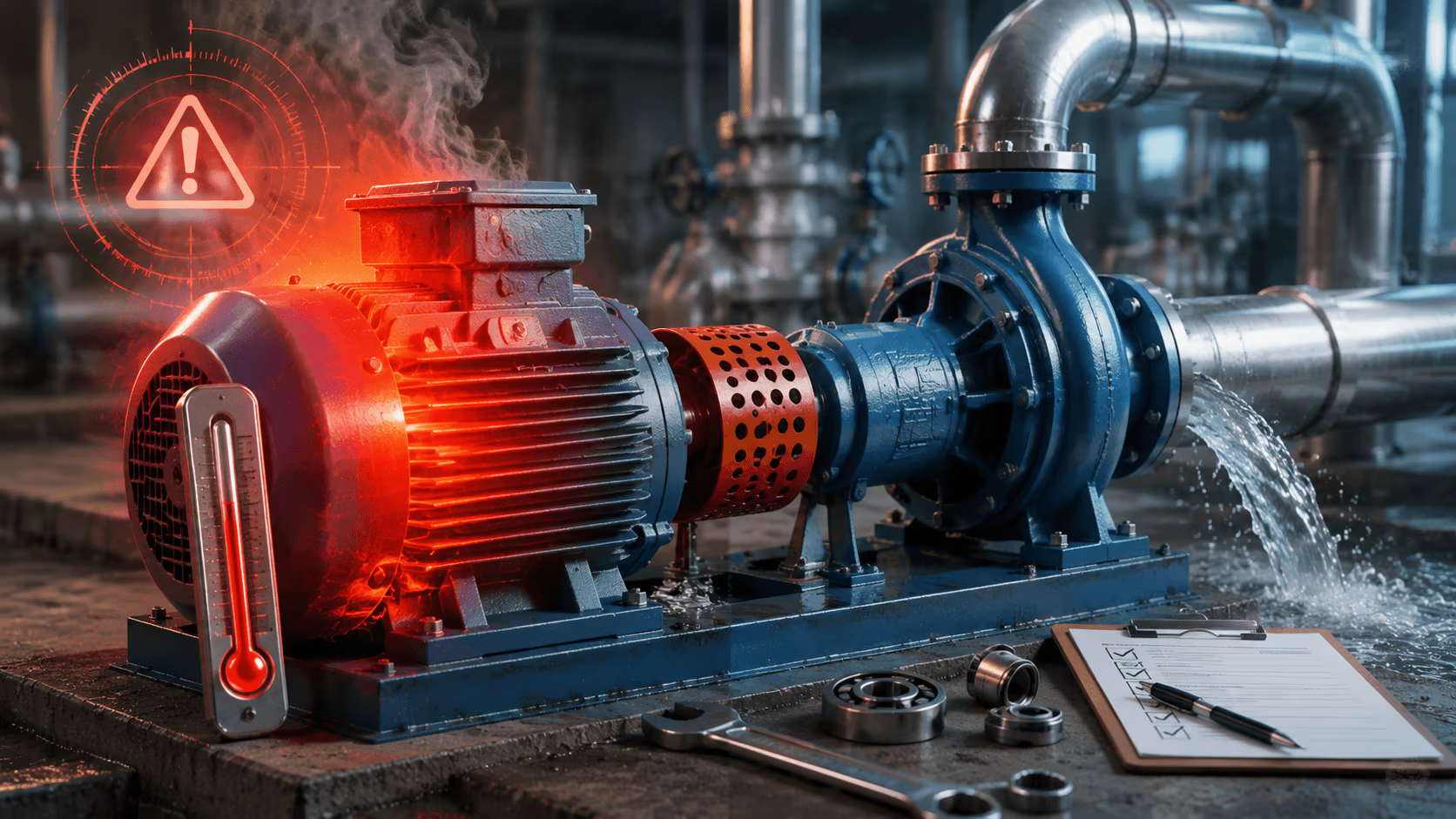
2026 Water Pump Overheating Guide: Identify root causes (mechanical 60%+, hydraulic, electrical, operational negligence), apply immediate emergency fixes, implement targeted solutions, and establish prevention protocols (PM scheduling, system monitoring, proper head/flow selection)—avoid motor burnout and costly downtime with TECHO engineering expertise.
Table of Contents
- The Severe Impacts of Unaddressed Overheating
- Core Root Causes (Four Categories)
- Effective Solutions: Emergency & Targeted
- Preventive Measures
- Key Takeaways
Introduction
Overheating is among the most prevalent and destructive malfunctions in water pump systems, affecting industrial, agricultural, commercial, and residential installations alike. Left unaddressed, it leads to accelerated component wear, motor burnout, sudden system shutdowns, and costly unplanned downtime.
Critically, pump overheating is rarely a sudden failure. It is a gradual warning sign of underlying issues—detectable through temperature gauges, unusual noise, or reduced performance. Early detection and immediate intervention can prevent catastrophic damage and extend the pump's service life by years.
1. The Severe Impacts of Unaddressed Overheating
Unlike minor performance issues, overheating is a systemic problem that compounds damage over time, affecting every core component of the pump and its associated system.
| Impact Category | Consequence |
|---|---|
| Component Degradation | Lubricant breakdown, warped metal parts, premature failure of bearings, seals, and impellers |
| Motor Burnout | Damaged copper windings and insulation → short circuits → irreversible motor failure requiring full replacement |
| Reduced Efficiency | Increased internal friction and energy loss → higher power consumption with lower flow and head output |
| Unplanned Downtime | Disrupted industrial processes, irrigation cycles, and commercial water supply → lost productivity and emergency repair costs |
| Safety & Environmental Risk | Fluid leakage, fire hazards, or pump casing rupture in extreme cases → risk to personnel and surroundings |
2. Core Root Causes of Water Pump Overheating
Water pump overheating stems from four primary categories. Accurate diagnosis requires distinguishing between these interrelated factors, as each presents distinct warning signs and demands specific corrective action.
2.1 Mechanical Faults (>60% of Cases)
Mechanical issues constitute the dominant cause of pump overheating. They create excessive friction that converts mechanical energy directly into heat, typically resulting from poor maintenance or unaddressed normal wear.
- Bearing Wear or Seizure — Worn, corroded, or under-lubricated bearings create extreme friction, causing rapid temperature rise around the shaft and motor housing.
- Seal Malfunction — Damaged mechanical seals cause fluid leakage, reducing cooling capacity and allowing contaminant ingress that increases inter-component friction.
- Shaft Misalignment or Imbalance — Improper installation or prolonged vibration induces misalignment between pump and motor shafts; an unbalanced impeller generates uneven load and localized heat.
- Casing or Impeller Obstruction — Debris, scale, or sediment buildup restricts movement, forcing the motor to work harder and generate excess heat.
2.2 Hydraulic Inefficiencies
Hydraulic issues relate to the pump's interaction with the displaced fluid, often resulting from incorrect system design or mismatched pump-application specifications. These inefficiencies force operation outside the optimal efficiency band.
- Low Flow or Dry Running — Insufficient fluid supply leads to cavitation and dry running; without fluid to cool and lubricate internal parts, temperatures spike rapidly.
- Overpressure and Throttling — Excessive system resistance and continuous discharge-line throttling waste energy as heat and overload the motor.
- Pump Oversizing or Undersizing — An oversized pump operates at persistently low flow; an undersized pump is constantly overloaded—both cause inefficient energy conversion and excess heat.
- Fluid Viscosity Mismatch — Pumping fluids exceeding design viscosity increases internal resistance and motor current draw.
2.3 Electrical Problems
Electrical issues affect the motor—the heart of the system—and are frequently misdiagnosed as mechanical faults. They pose a high risk of permanent, irreversible motor damage.
- Voltage Fluctuations — Low voltage, high voltage, or unbalanced three-phase supply forces excessive current draw, overheating stator and rotor windings.
- Winding Insulation Degradation — Age, moisture, dust, or prior thermal damage compromises insulation → short circuits, ground faults, and localized heat buildup.
- Faulty Electrical Components — Defective contactors, relays, fuses, or VFDs cause intermittent supply or incorrect motor operation → uneven load and overheating.
- Incorrect Wiring or Grounding — Improper connections create circuit resistance, generating heat and elevating motor failure risk.
2.4 Operational & Maintenance Negligence
Many overheating cases are entirely preventable, caused by improper operation, inadequate maintenance, or absent system monitoring. These factors compound minor issues into major failures.
- Continuous Overload Operation — Sustained operation beyond design flow, head, or pressure limits.
- Lack of Routine Maintenance — Infrequent lubrication, filter cleaning, seal inspection, and descaling allow progressive deterioration.
- Improper Startup/Shutdown — Sudden starts, frequent cycling, or incorrect shutdown sequences create hydraulic shocks and electrical surges.
- Absent Monitoring — No temperature gauges, pressure sensors, or flow meters → overheating detected only upon catastrophic failure.
3. Effective Solutions for Overheating Water Pumps
Resolving water pump overheating requires a systematic, diagnosis-first approach: identify the root cause category via visual inspection, performance data, and temperature monitoring, then implement targeted corrective action.
3.1 Immediate Emergency Protocol
🛑 If the pump is actively overheating, execute these steps immediately to prevent catastrophic damage:
- Shut down the pump and allow it to cool to ambient temperature. Do not attempt to operate while overheated.
- Verify fluid supply — ensure the suction line is unclogged, the water source is at the correct level, and all intake valves are fully open.
- Inspect the discharge line — open closed valves, release excess pressure, and check for obstructions.
- Check the power supply — verify stable voltage; reset tripped breakers or thermal overloads.
- Perform a visual inspection — identify loose connections, leaking seals, or debris buildup.
3.2 Targeted Solutions by Root Cause
| Root Cause Category | Corrective Actions |
|---|---|
| Mechanical | Replace worn/seized bearings; re-lubricate with manufacturer-specified grease. Replace damaged seals and gaskets. Realign pump-motor shaft; balance impeller. Clean casing, impeller, and suction strainer. |
| Hydraulic | Install larger-area suction strainer. Redesign system: upsize piping, add pressure relief valves, remove unnecessary throttling. Replace mismatched pump with correctly sized model. Heat/thin high-viscosity fluids to spec. Install anti-cavitation devices. |
| Electrical | Install voltage stabilizer / surge protector. Repair or replace damaged windings; perform megohmmeter test. Replace faulty components; verify wiring and grounding. Install thermal overload protector and motor protection relay. |
| Operational | Adjust practices to avoid continuous overload; use flow control valves. Implement scheduled PM program. Install soft start/stop devices. Add monitoring instrumentation (temperature, pressure, flow, vibration). |
4. Preventive Measures to Avoid Future Overheating
The most cost-effective strategy is prevention. A proactive approach can eliminate approximately 90% of preventable overheating cases.
4.1 Scheduled Preventive Maintenance (PM) Program
- Create a maintenance calendar based on design life and application severity.
- Include: lubrication, filter cleaning, seal inspection, descaling, and electrical checks.
- Document all activities for traceability and trend analysis.
4.2 Optimize Pump-System Matching
- Confirm the pump is correctly sized for the application's flow, head, fluid viscosity, and temperature requirements.
- Reference the manufacturer's H–Q performance curve; ensure operation within the optimal efficiency band.
4.3 Comprehensive Monitoring Systems
- Equip the system with temperature, pressure, flow, and vibration sensors.
- Integrate with SCADA or PLC platforms for remote, real-time monitoring and automated alarms.
4.4 Personnel Training
- Train all on-site staff on correct startup/shutdown procedures, load limits, and early warning sign recognition.
- Establish clear escalation protocols for abnormal readings.
4.5 Fluid Quality & Electrical Protection
- Maintain clean water/fluid sources; install effective filtration; descale pump and piping regularly.
- Install surge protectors, voltage stabilizers, and motor protection devices; perform periodic electrical inspections.
4.6 Regular Performance Audits
- Test flow rate, head, power consumption, and operating temperature at least twice annually.
- Compare results against baseline data to identify progressive degradation.
💡 For Critical Systems: Consider a predictive maintenance program utilizing vibration analysis, oil analysis, and thermal imaging to detect component wear before visible symptoms manifest.
5. Key Takeaways: Diagnose, Resolve, Prevent
Water pump overheating is never a random event—it is the direct consequence of mechanical faults, hydraulic inefficiencies, electrical defects, or preventable operational errors. The principles of effective resolution are:
- Diagnose accurately — Identify the root cause category; avoid addressing only the symptom.
- Act immediately — Emergency shutdown and inspection prevent catastrophic escalation.
- Correct systematically — Implement targeted solutions matched to the specific cause.
- Prevent proactively — A well-maintained pump operating within design limits will rarely overheat.
Investing in prevention and timely maintenance is invariably more cost-effective than emergency repairs or full pump replacement.
Solve Water Pump Overheating with Professional Expertise
Water pump overheating disrupts industrial processes, agricultural irrigation, and commercial water supply—resulting in costly downtime, component failure, and lost productivity. Our team of certified pump engineering specialists possesses decades of experience diagnosing and resolving overheating issues across all pump types and applications.
[Get Your Custom Overheating Solution →]
From root cause analysis to preventive maintenance program design, our engineers deliver tailored solutions that restore reliability and protect your operational continuity.
© 2026 TECHO Pump Engineering. All rights reserved.