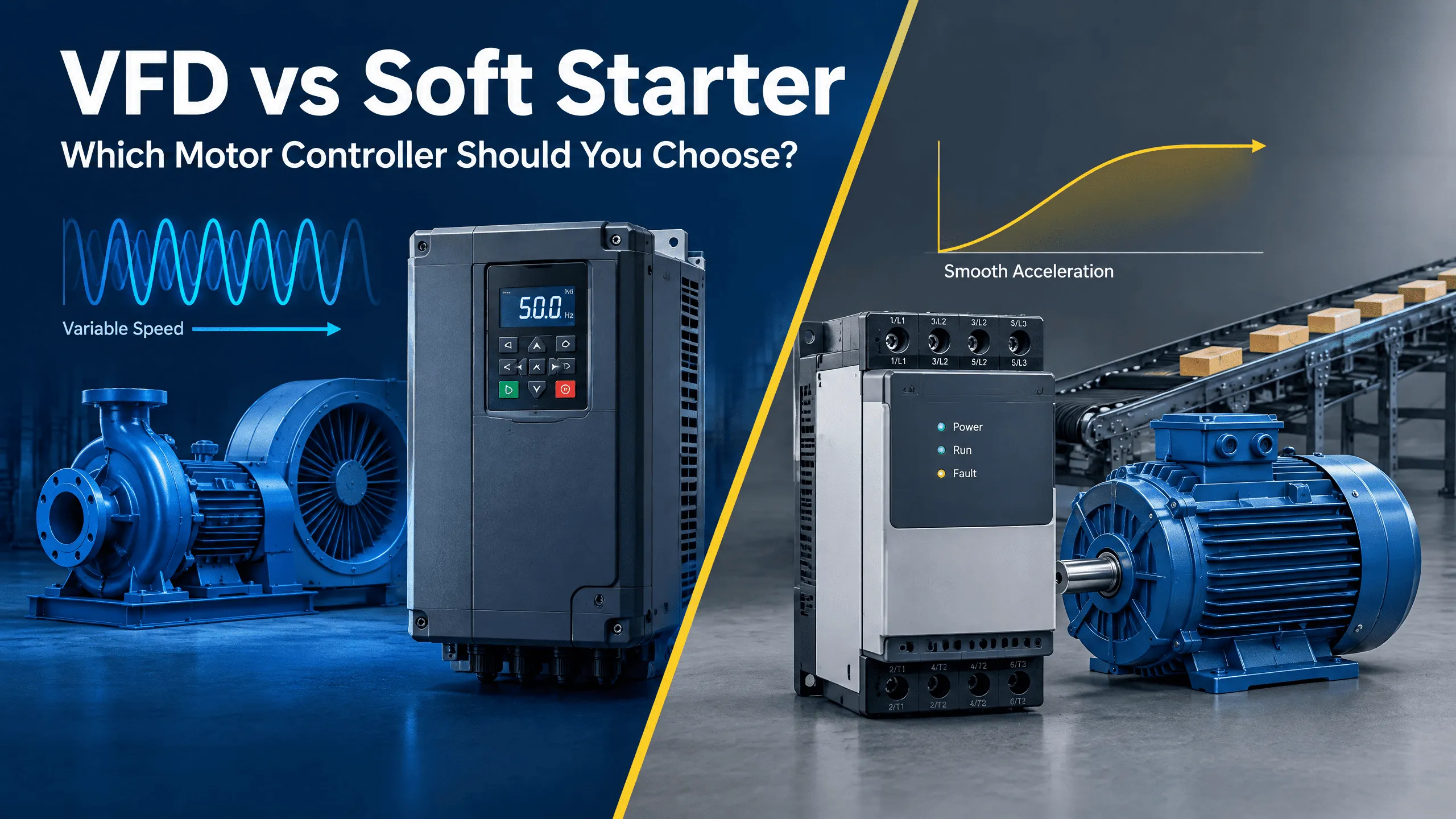
When an industrial motor creates a large current spike or a damaging mechanical shock at startup, two common solutions are a variable frequency drive (VFD) and a soft starter. They are often discussed as if they were interchangeable. They are not.
Short answer: choose a soft starter when the motor normally runs at one fixed speed and the main problem is harsh starting or stopping. Choose a VFD when the process needs ongoing speed control, variable torque, accurate acceleration, or energy savings from matching motor speed to demand. A soft starter is usually the more economical fix for starting stress; a VFD is the more capable process-control platform.
This guide is written for plant engineers, equipment designers, maintenance teams, and industrial buyers. It compares the two technologies by control method, startup behavior, energy, cost, installation, maintenance, and application fit. The recommendations are based on current public technical guidance from Schneider Electric, Eaton, Danfoss, and Siemens; exact performance depends on the selected motor, controller, load, and operating profile.
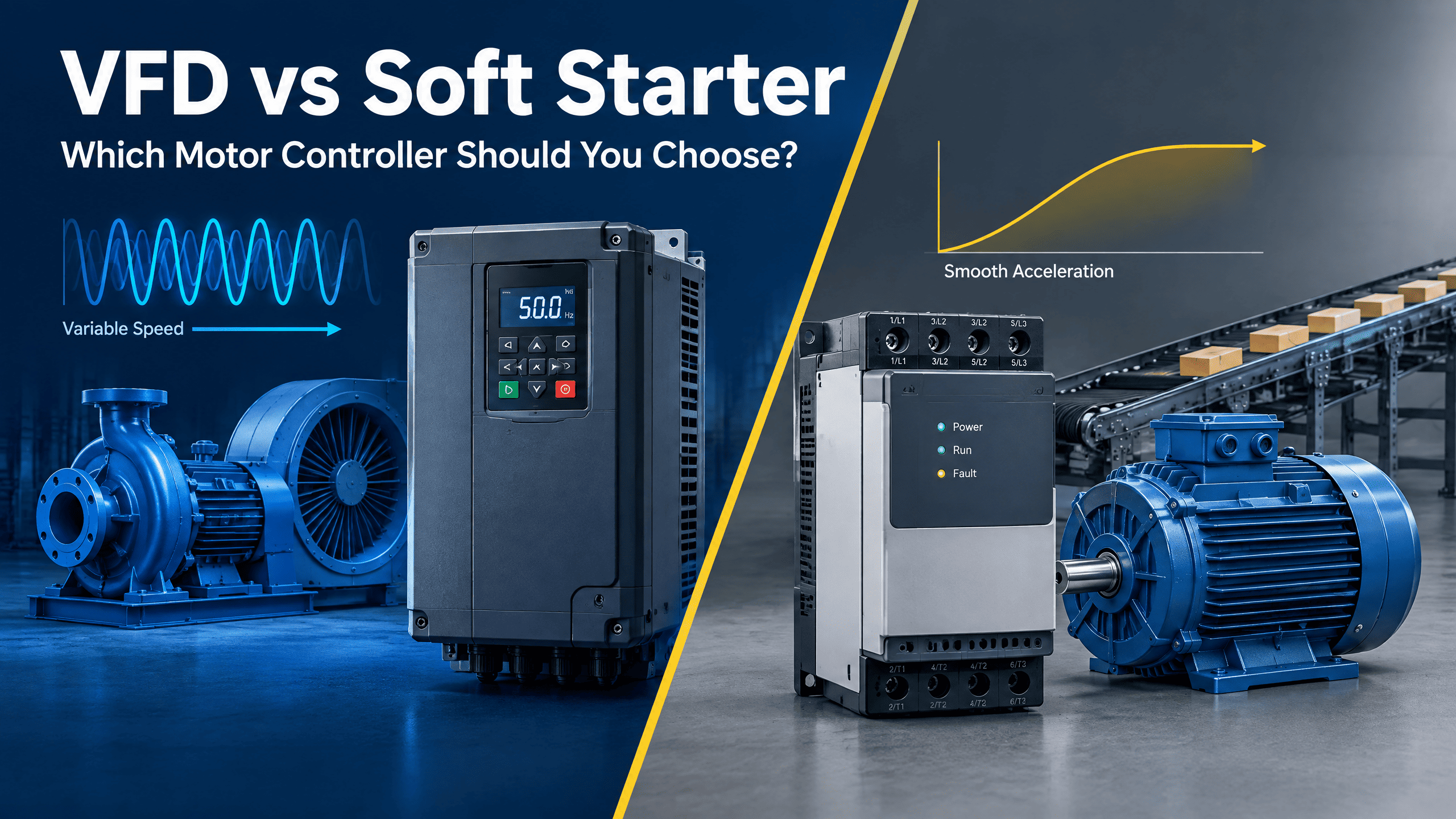
Figure 1. A neutral visual comparison of a variable frequency drive and a soft starter in an industrial motor-control system.
VFD vs Soft Starter: Quick Comparison
| Decision criterion | VFD | Soft starter |
|---|---|---|
| Primary job | Controls motor speed, torque, acceleration, and deceleration throughout operation | Reduces starting and stopping stress; normally does not control running speed |
| How it works | Converts AC to DC and back to variable-frequency, variable-voltage AC | Uses controlled semiconductor switching, commonly SCRs/thyristors, to ramp motor voltage |
| Speed control after startup | Yes; continuously adjustable | No in the usual configuration; motor runs at line frequency after ramp-up |
| Starting current and torque | Low starting current with strong, programmable torque control | Limits current by reducing voltage, which also reduces available starting torque |
| Energy-saving potential | High for variable-demand fans, pumps, compressors, and similar loads | Low during steady running; its main benefit is reduced startup stress |
| Upfront system cost | Usually higher; Eaton notes it can initially cost two to three times more than a soft starter in some comparisons | Usually lower, smaller, and simpler for fixed-speed applications |
| During full-speed operation | Remains active and creates drive losses, but provides control and diagnostics | Often bypassed by a contactor, reducing running losses and heat |
| Best fit | Variable-speed processes, energy optimization, conveyors, pumps, fans, compressors, lifts, and precise motion | Fixed-speed motors needing gentler starts/stops, reduced voltage dip, and lower mechanical shock |
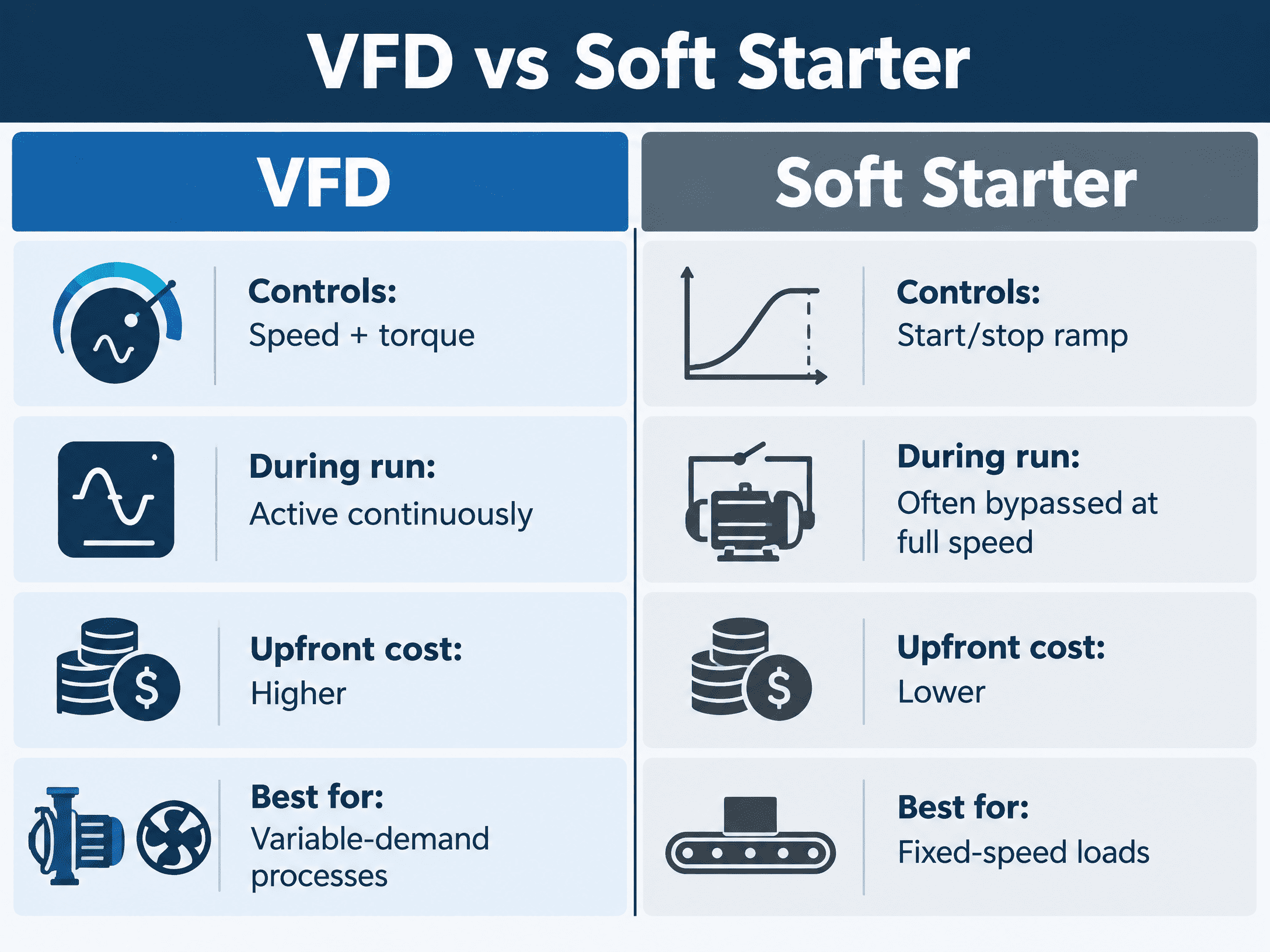
Figure 2. The simplest decision rule: a VFD controls the process; a soft starter primarily protects the start and stop.
What Is the Fundamental Difference?
A VFD changes both the frequency and voltage supplied to an AC motor. Because motor speed is related to supply frequency, the drive can command the motor to run below, at, or—within design limits—above its normal line-frequency speed. Eaton describes a typical VFD as a system containing a rectifier, DC bus/filter, and inverter that creates a controlled output using pulse-width modulation [2].
A soft starter temporarily reduces the voltage applied to the motor during acceleration. It controls the ramp-up, and sometimes the ramp-down, using solid-state devices such as silicon-controlled rectifiers. Once the motor reaches full speed, many soft-starter systems use a bypass contactor so that the semiconductor stage is no longer carrying the continuous motor current [2].
The distinction can be stated in one sentence:
A soft starter changes how the motor reaches speed; a VFD changes the speed at which the motor runs.
That difference determines nearly every cost, performance, and application decision that follows.
1. Startup Performance: Both Reduce Stress, but They Do It Differently
A direct-on-line motor start can produce a high inrush current and a sudden torque step. The electrical effects may include a voltage dip on the plant bus; the mechanical effects may include belt tension, water hammer, gear shock, coupling stress, or product damage.
Both devices improve this situation. Siemens states that its soft starters provide soft start and soft stop for three-phase motors while reducing mechanical stress and line-voltage dips [4]. Eaton similarly explains that both technologies reduce inrush current and limit torque during acceleration [2].
The difference is torque control. A soft starter limits voltage, and motor torque is closely related to the square of voltage in common induction-motor starting conditions. Reducing voltage therefore reduces starting torque as well as current. That is acceptable when the load accelerates easily, but it may be a problem for a high-inertia conveyor, crusher, or heavily loaded pump.
A VFD starts at a low frequency and can maintain useful torque while accelerating the motor gradually. It can also set a precise acceleration profile, limit current, compensate for load, and stop the motor under controlled conditions.
Criterion winner: VFD for demanding or high-inertia starts; soft starter for straightforward current limiting and mechanical ramping. Always check the load’s breakaway torque before selecting a soft starter.
2. Running Control: This Is Where VFDs Pull Away
A soft starter is generally bypassed or inactive after the motor reaches full speed. It does not normally regulate the motor to 42 Hz, 48 Hz, or 55 Hz during production. If the process needs a different speed, the motor still operates at the fixed supply frequency and the process is adjusted by another method, such as a valve, damper, mechanical transmission, or on/off cycling.
A VFD stays involved throughout the run cycle. Eaton identifies complete speed control, custom control, dynamic torque control, smooth motion, and consistent acceleration as key VFD benefits [2]. Danfoss likewise describes the VFD as a way to match motor speed to the actual demand of the driven equipment [3].
This matters when the process changes. A pump may need less flow at night. A fan may need less airflow in a partially occupied building. A conveyor may need different speeds for different products. A mixer may need a slow ramp, a high-speed phase, and a controlled deceleration. A VFD can implement these profiles directly; a soft starter cannot.
Criterion winner: VFD by definition. If the motor must operate at more than one useful running speed, begin with a VFD rather than adding a soft starter to a problem it cannot solve.
3. Energy Efficiency: VFDs Win Only When the Process Can Use Speed Reduction
This is the most frequently overstated part of the comparison. A soft starter is not normally an energy-saving device during steady-state operation. Its main value is reducing startup stress and sometimes reducing the cost of oversized electrical infrastructure. If the motor runs at full speed for the same number of hours, a soft starter usually cannot create the type of continuous energy reduction delivered by variable-speed operation.
A VFD can reduce energy consumption when the process demand varies and the load is suitable for speed control. The strongest case is a variable-torque load such as a centrifugal fan or pump. Under the affinity-law relationship, flow varies approximately with speed, pressure with the square of speed, and power with roughly the cube of speed. That means a modest reduction in speed can create a much larger reduction in input power.
The illustration below shows the mathematical relationship, not a guaranteed field result. At 80% speed, the idealized relative power is approximately 51%; at 50% speed, it is approximately 13%. Actual savings depend on the system curve, minimum flow requirements, motor and drive efficiency, control tuning, bypass operation, and how often the load operates below full speed.
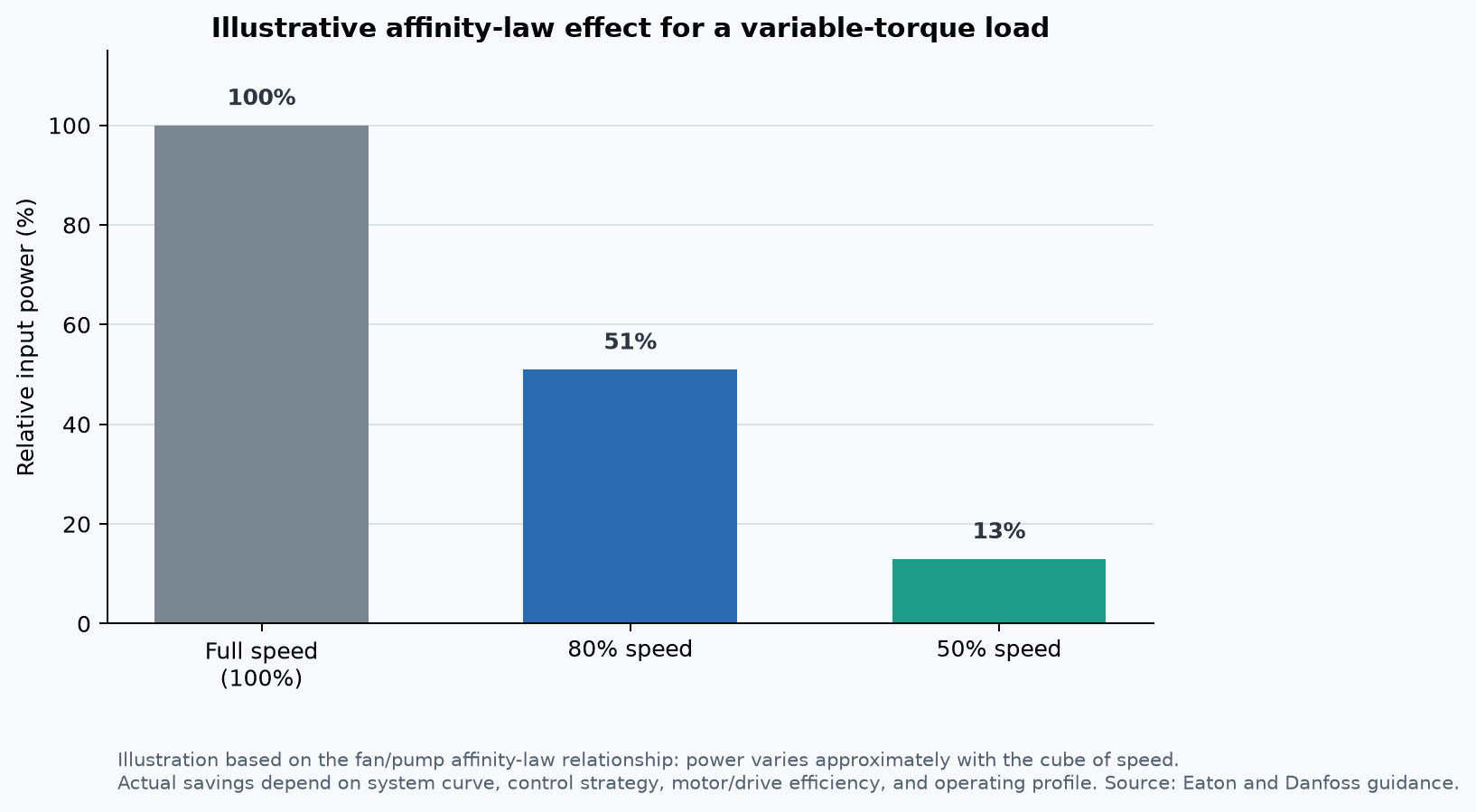
Figure 3. An illustrative affinity-law relationship for a variable-torque fan or pump; it is not a universal savings guarantee.
Danfoss cites common VFD energy savings of around 40% in suitable applications and notes that fans and pumps offer especially strong potential [3]. Eaton gives a similar warning in a different form: VFDs can provide major lifecycle savings, but the actual result depends on the application and operating profile [2].
Criterion winner: VFD for variable-demand pumps, fans, compressors, and HVAC loads; neither device should be sold as an automatic energy solution without a load-profile calculation.
4. Cost: Compare the Whole Lifecycle, Not Only the Catalog Price
Soft starters are usually less expensive than VFDs, especially when the motor is large and the application only needs a controlled start. They are also generally smaller and simpler to specify. Eaton states that a VFD can initially cost two to three times more than a soft starter in some cases [2]. The exact ratio varies by voltage class, horsepower, enclosure, bypass arrangement, harmonic mitigation, communications, and supplier.
A VFD costs more because it does more. It includes the power-conversion stage and control platform required to regulate the motor throughout operation. It may also require additional attention to harmonic distortion, motor cable length, output filters, EMC, cooling, and application programming.
The correct financial comparison should include:
-
controller purchase price and enclosure space;
-
installation, wiring, commissioning, and programming;
-
motor compatibility and possible inverter-duty requirements;
-
power-quality equipment, filters, reactors, or bypass hardware;
-
energy savings over the expected duty cycle;
-
maintenance and replacement costs;
-
production value from better process control;
-
the cost of mechanical failures avoided through controlled acceleration and deceleration.
For a fixed-speed motor that starts only a few times per day, a soft starter often has the better return. For a pump or fan that spends most of its life throttled or damped at reduced demand, the VFD may recover its premium through energy savings.
Criterion winner: soft starter for lowest initial cost; VFD for applications where operating savings or process value justify the premium.
5. Maintenance, Reliability, and Heat
A soft starter has fewer continuously active power-conversion functions during normal running when its bypass contactor is engaged. Siemens highlights integrated bypass as a way to reduce energy losses and additional heat during operation [4]. This can be attractive in applications where the motor runs at one speed and the electrical cabinet has limited thermal capacity.
A VFD remains active while the motor runs. It introduces switching losses and requires appropriate cooling, dust control, ventilation, and parameter management. In return, it often provides fault history, motor protection, diagnostics, communications, and a more complete view of the drive system.
Neither technology is “maintenance-free.” Soft starters require inspection of power connections, cooling, bypass contactors, and semiconductor condition. VFDs require attention to cooling fans, filters, DC-bus components, terminals, grounding, cable shielding, programming, and harmonics. The most reliable choice is the one that matches the environment and can be supported by the site’s technicians.
Criterion winner: soft starter for simple fixed-speed operation and lower continuous drive heat; VFD for diagnostics, protection, and control-rich systems.
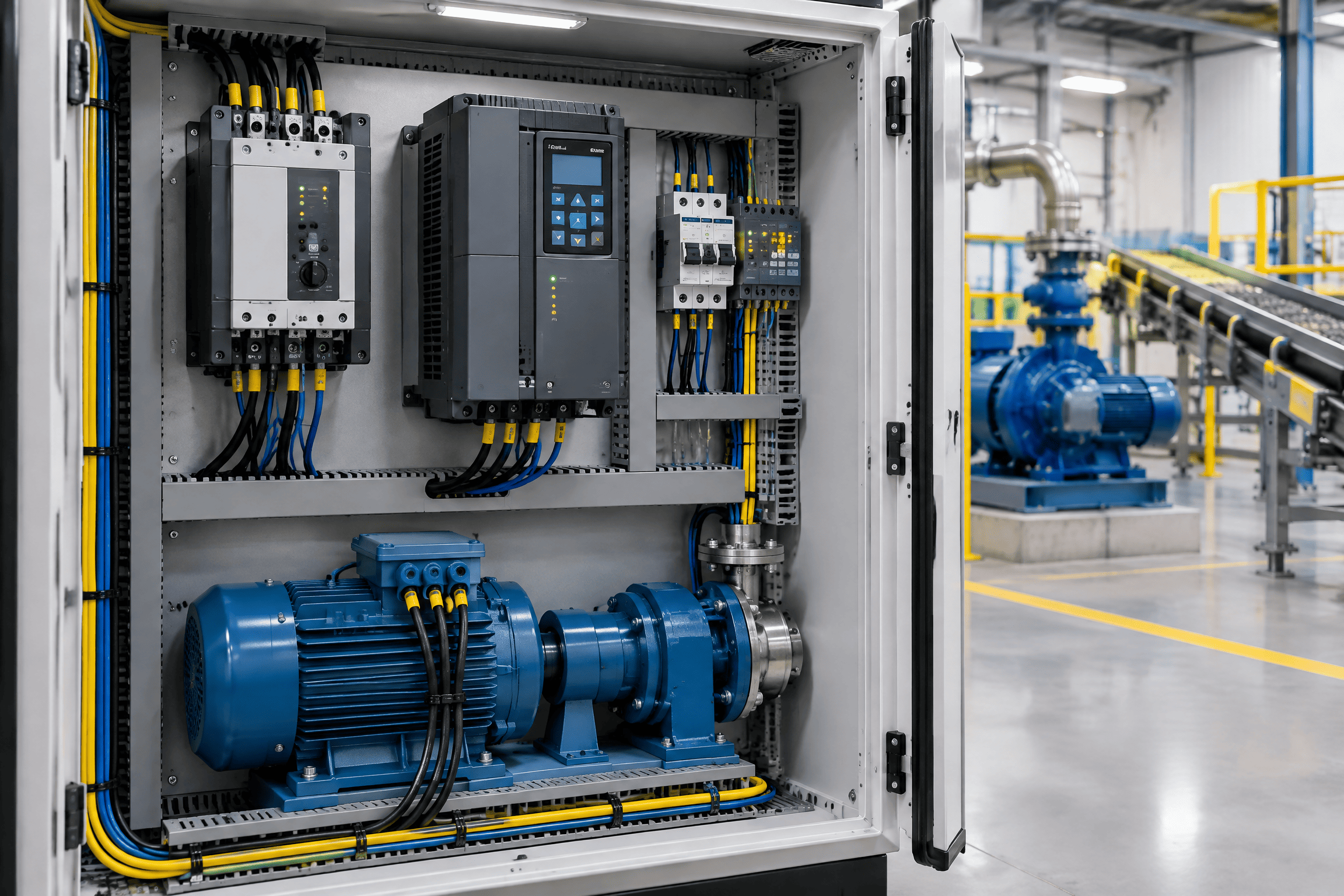
Figure 4. Motor-control selection must account for the complete cabinet, motor, wiring, cooling, and driven process—not only the front-panel device.
6. Applications: Choose by the Problem You Are Actually Solving
Strong soft-starter applications
A soft starter is usually the better fit when the motor’s required operating speed is fixed and the plant needs a gentler transition into or out of operation. Typical examples include:
-
pumps where pressure surges or water hammer are a concern;
-
conveyors where belt tension and product movement must be controlled;
-
compressors with a known, fixed-speed operating point;
-
fans that always need full-speed operation after startup;
-
large motors where reducing inrush helps the electrical distribution system;
-
machines that start infrequently and do not need process-speed adjustment.
Strong VFD applications
A VFD is usually the better fit when the motor speed should respond to process demand or when precise motion matters. Typical examples include:
-
HVAC fans and pumps with changing flow demand;
-
water and wastewater pumping systems;
-
conveyors with multiple production speeds;
-
mixers, extruders, centrifuges, and process machinery;
-
cranes, hoists, lifts, and controlled motion systems;
-
compressors with variable demand and suitable control strategy;
-
applications where energy, diagnostics, or network integration are priorities.
Rockwell Automation summarizes the same practical pattern: soft starters are often best for simple start-and-stop applications, while VFDs are better suited to pumps, fans, conveyors, and processes requiring speed control [5].
Pros and Cons
VFD
Pros
-
Continuous speed and torque control.
-
Controlled acceleration and deceleration across the full operating cycle.
-
Strong energy-saving potential for suitable variable-torque loads.
-
Excellent fit for process automation, diagnostics, and networked control.
-
Can provide low-speed operation and useful starting torque.
Cons
-
Higher upfront cost and greater specification complexity.
-
Produces switching-related losses, harmonics, and potential EMC issues.
-
Requires appropriate commissioning, cooling, grounding, and motor-cable practices.
-
Savings are weak when the motor must run at full speed almost all the time.
Soft starter
Pros
-
Lower upfront cost for fixed-speed applications.
-
Reduces inrush current, voltage dips, and mechanical shock during starting.
-
Often smaller and simpler to install than a VFD.
-
Bypass operation can reduce continuous heat and running losses.
-
Good fit for pumps, conveyors, and motors that need a gentle start but no speed adjustment.
Cons
-
Does not provide normal running-speed control.
-
Reduced voltage also reduces starting torque, which can be a problem for heavy loads.
-
Offers less process-control capability than a VFD.
-
Does not normally deliver meaningful steady-state energy savings by itself.
-
Requires a separate solution if the process later needs variable speed.
VFD or Soft Starter: A Practical Decision Framework
Choose a soft starter if you can answer “yes” to most of these questions:
-
Will the motor run at one fixed speed?
-
Is the primary problem a high inrush current or mechanical shock at startup?
-
Does the load accelerate easily with reduced voltage and torque?
-
Are low purchase price, compact size, and simple commissioning priorities?
-
Is the motor started only occasionally?
Choose a VFD if you can answer “yes” to most of these questions:
-
Must the motor run at multiple speeds?
-
Does flow, pressure, airflow, throughput, or product speed change during operation?
-
Can reducing speed reduce power demand without violating the process requirement?
-
Is controlled torque, low-speed operation, or precise acceleration important?
-
Would diagnostics, communications, or closed-loop control create operational value?
If the answers are mixed, calculate the load profile before deciding. Record speed, torque, runtime, starts per hour, process demand, and current control method. For a fan or pump, compare the energy used with throttling or damper control against the expected VFD operating curve. For a conveyor or compressor, compare the required starting torque and duty cycle against the soft starter’s reduced-voltage capability.
Frequently Asked Questions
Is a VFD better than a soft starter?
Neither is universally better. A VFD is better when the process needs continuous speed or torque control and may save energy at reduced speed. A soft starter is better when the motor runs at a fixed speed and only needs a gentler start or stop at a lower initial cost.
Can a VFD replace a soft starter?
Often, yes. A VFD can provide controlled starting and stopping as well as running-speed control. But using a VFD only to soften a fixed-speed motor start may add cost and complexity that a soft starter would avoid.
Does a soft starter save energy?
Its main benefit is reduced electrical and mechanical stress during starting. It usually does not produce large steady-state energy savings after the motor reaches full speed, especially when a bypass contactor is used. Energy savings are primarily a VFD advantage when speed can be reduced to match demand.
Does a VFD reduce starting current?
Yes. A VFD can start a motor at a controlled frequency and voltage, which generally reduces inrush current while maintaining better torque control than a reduced-voltage soft starter. The exact result depends on the drive mode, motor, load, and programmed current limit.
What is better for a pump: VFD or soft starter?
It depends on whether the pump demand changes. A soft starter is suitable for a pump that runs at one speed and mainly needs to avoid water hammer or a large starting current. A VFD is usually more attractive when flow or pressure changes and the system can reduce pump speed instead of throttling flow.
What is better for a conveyor?
A soft starter may be sufficient for a fixed-speed conveyor that needs a smooth ramp to protect belts and gearboxes. A VFD is preferable when the conveyor needs multiple speeds, controlled positioning, frequent acceleration, regenerative braking, or process synchronization.
Bottom Line
The choice between a VFD and a soft starter becomes clear when the question is framed correctly. If the requirement is “start this motor without a current spike or mechanical shock,” evaluate a soft starter first. If the requirement is “run this process at the speed and torque it needs at every moment,” evaluate a VFD first.
A soft starter is a focused and economical starting solution. A VFD is a broader motor-control and energy-management platform. The best selection is the one that solves the actual operating problem without paying for unused capability—or sacrificing the control, energy performance, and reliability that the process requires.
Sources and Verification Notes
-
Schneider Electric, “What’s the difference between a Soft Starter and a VFD?”, accessed September 16, 2026. Used for operating principles, speed-control distinction, cost, and application guidance.
-
Eaton, “Soft starter or VFD? How to choose between a soft starter and a variable frequency drive”, accessed September 16, 2026. Used for applications, VFD and soft-starter operation, cost comparison, energy guidance, and bypass behavior.
-
Danfoss, “What is a variable frequency drive?”, accessed September 16, 2026. Used for VFD operation, energy-saving context, and variable-demand applications.
-
Siemens, “SIRIUS 3RW Soft Starters”, accessed September 16, 2026. Used for soft start/stop, voltage-dip reduction, bypass, and fixed-speed applications.
-
Rockwell Automation, “Variable Frequency Drives (VFDs)”, accessed September 16, 2026. Used for the practical application distinction between simple start/stop and variable-speed processes.
Publishing note: Pricing and savings are application-specific. Before publication or procurement, confirm the motor horsepower, voltage, starting torque, duty cycle, number of starts per hour, load curve, ambient temperature, enclosure, bypass requirement, harmonic limits, EMC requirements, and supplier quotation.