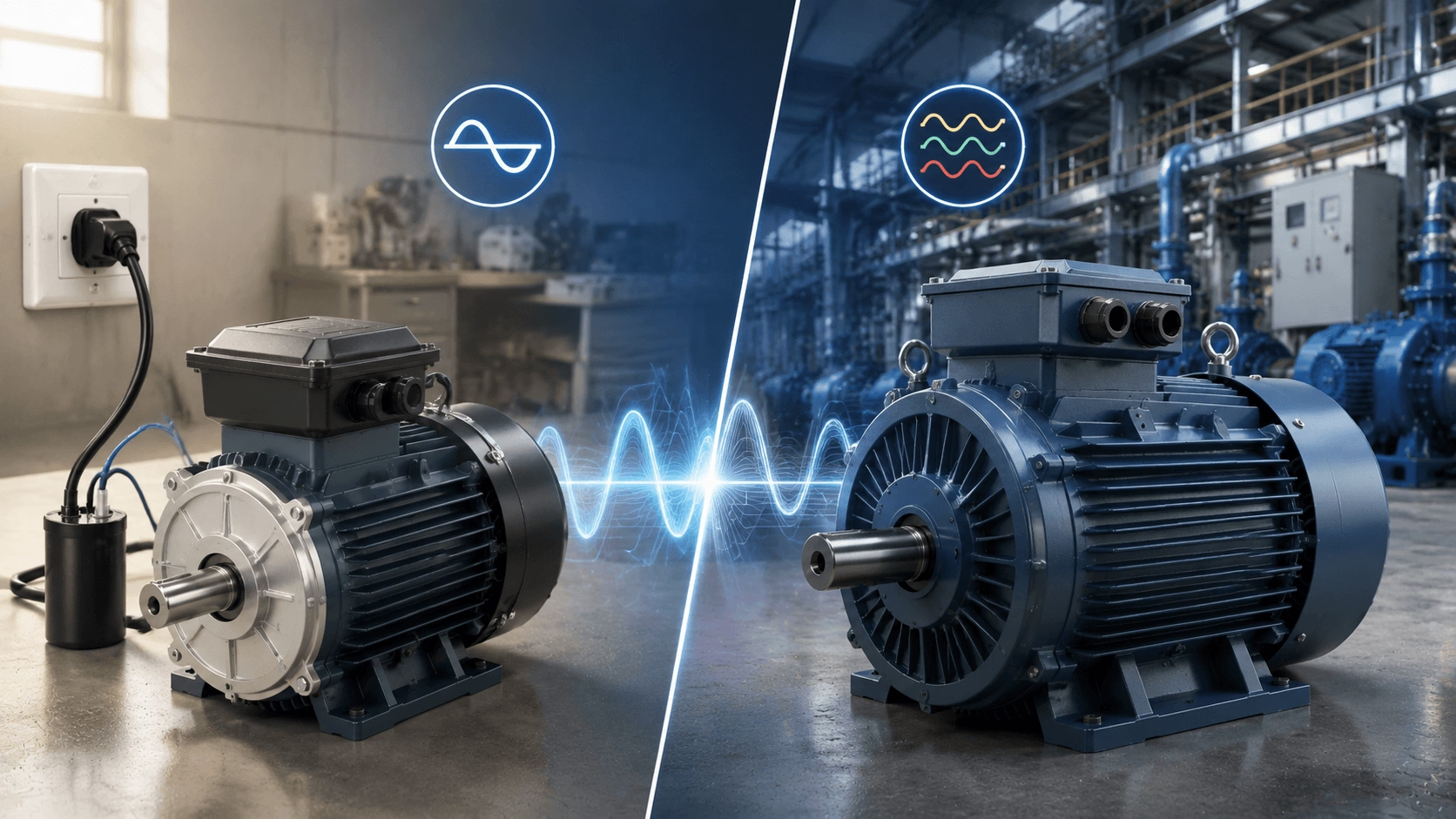
Detailed comparison of single phase vs three phase motors. Learn about efficiency, cost, applications, and wiring. TITECHO helps you choose the right motor power supply.
1. Introduction: The Power Supply Decision
When selecting an AC motor for industrial or commercial applications, one of the first decisions involves the power supply: Single Phase or Three Phase? This choice impacts not only the motor's performance and efficiency but also the overall cost of installation and operation.
At TITECHO, we frequently assist customers in navigating this decision. This guide provides a detailed technical comparison to help you select the optimal power configuration for your specific needs.
2. Understanding the Fundamental Differences
2.1 Single Phase Motors
- Power Supply: Uses one live wire and one neutral wire.
- Voltage: Typically 110V, 220V, or 240V.
- Starting Mechanism: Requires a capacitor or starting winding to generate initial torque because a single phase does not produce a rotating magnetic field on its own.
- Common Uses: Residential appliances, small tools, light commercial equipment.
2.2 Three Phase Motors
- Power Supply: Uses three live wires (and optionally a neutral).
- Voltage: Typically 208V, 380V, 400V, or 480V.
- Starting Mechanism: Self-starting. The three phases naturally create a rotating magnetic field.
- Common Uses: Industrial machinery, large pumps, compressors, conveyor systems.
3. Performance Comparison
| Feature | Single Phase Motor | Three Phase Motor |
|---|---|---|
| Efficiency | Lower (70–85%) | Higher (85–96%) |
| Power Factor | Lower | Higher |
| Starting Torque | Lower (requires assistance) | Higher (self-starting) |
| Vibration & Noise | Higher (pulsating power) | Lower (smooth delivery) |
| Maintenance | Higher (capacitors may fail) | Lower (simpler construction) |
| Maximum Power | Typically < 5 kW | Up to hundreds of kW |
4. Cost Analysis
4.1 Initial Cost
- Single Phase: Generally cheaper for small power ratings (< 1 kW) due to simpler wiring infrastructure in residential areas.
- Three Phase: Motor unit cost may be slightly higher, but cost per kW decreases significantly as power rating increases.
4.2 Installation Cost
- Single Phase: Lower if existing infrastructure is residential.
- Three Phase: May require upgrading the electrical supply infrastructure (transformers, wiring), which can be costly initially.
4.3 Operational Cost
- Three Phase: Significantly lower due to higher efficiency. For continuous operation, the energy savings often outweigh the initial installation costs within the first year.
5. Application Scenarios
5.1 When to Choose Single Phase
- ✅ Small horsepower requirements (< 2 HP / 1.5 kW).
- ✅ Locations where three-phase power is unavailable (remote residential sites).
- ✅ Intermittent duty applications (gate operators, small fans).
- ✅ Budget-constrained projects with low running hours.
5.2 When to Choose Three Phase
- ✅ Industrial applications requiring > 2 HP / 1.5 kW.
- ✅ Continuous duty operations (pumps, compressors).
- ✅ Applications requiring high starting torque.
- ✅ Facilities aiming for energy efficiency (IE3/IE4 compliance).
- ✅ Environments where reliability is critical.
6. Conversion Options
If you have a three-phase motor but only single-phase power available, conversion is possible but not always recommended.
| Method | Description | Pros | Cons |
|---|---|---|---|
| VFD | Single phase input to three phase output | Smooth control, soft start | Higher cost, minor efficiency loss |
| Rotary Phase Converter | Idler motor generates third phase | Good for heavy loads | Bulky, noisy, high maintenance |
| Static Phase Converter | Capacitors for starting only | Low cost | Motor runs at ~2/3 power |
TITECHO Recommendation: For industrial applications, installing three-phase power is always preferable to converting. It ensures optimal motor life and efficiency.
7. Wiring and Safety Considerations
- Single Phase: Requires careful sizing of capacitors. Incorrect wiring can burn out the starting winding.
- Three Phase: Requires phase balance monitoring. Phase loss (losing one leg) can destroy a motor quickly without proper protection.
- Protection: Both types require overload protection, but three-phase motors benefit significantly from phase-loss relays.
8. Future Trends
As energy regulations tighten globally, single-phase motors are facing stricter efficiency standards. Three-phase motors, especially those compatible with VFDs, are becoming the standard for even smaller applications due to their superior control and efficiency.
9. Conclusion
Choosing between single-phase and three-phase motors depends on your power availability, power requirements, and operational goals. While single-phase motors suit small, intermittent tasks, three-phase motors are the undisputed choice for industrial efficiency and reliability.
TITECHO offers a comprehensive range of both motor types, ensuring you have the right solution for your power infrastructure.
Need Help Selecting the Right Motor?
- ✉️ Contact our technical team: [email protected]
- 🌐 View our motor catalog: www.cntecho.com
TITECHO – TECHO ELECTRICAL & MECHANICAL (TAIZHOU) CO., LTD