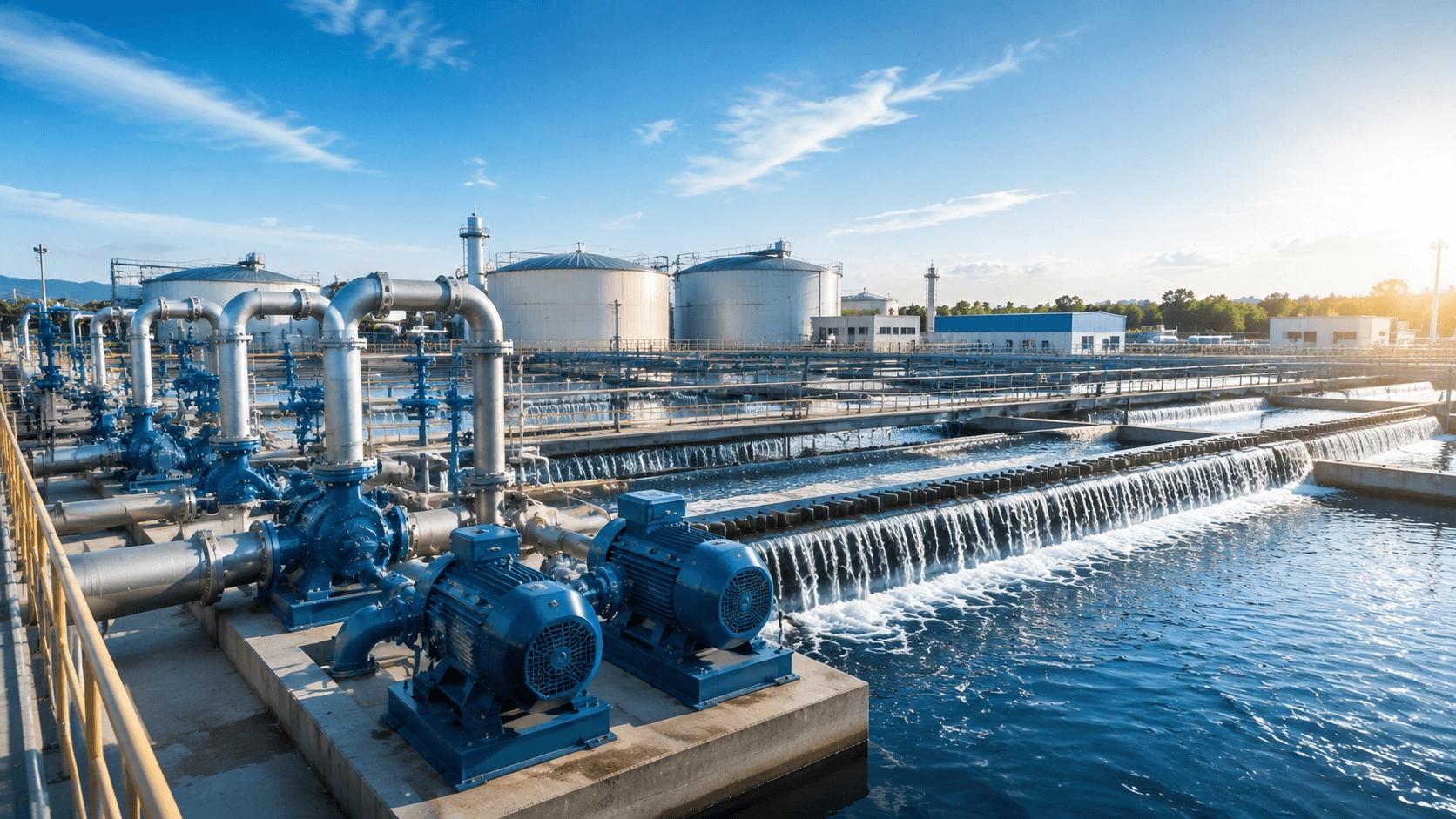
Discover the future of water treatment. A comprehensive guide to system efficiency, industrial challenges, and pumping technology. Learn how TITECHO drives sustainable water solutions.
Introduction: The Invisible Infrastructure of Civilization
Water is the essence of life, yet the systems that purify, distribute, and recycle it remain largely invisible to the public eye. Behind every tap lies a complex network of tanks, filters, and machinery working tirelessly to ensure safety and availability. However, as global water scarcity intensifies and energy costs rise, the focus is shifting from mere functionality to efficiency, sustainability, and intelligence.
For industrial facility managers and engineering professionals, the challenge is twofold: meet stringent environmental regulations while minimizing operational costs. At the heart of this challenge lies the pumping system. According to industry data, pumps account for nearly 90% of the electricity consumption in a water treatment facility.
In this comprehensive guide, TITECHO explores the evolving landscape of water treatment systems. We delve into the core processes, the engineering challenges of industrial wastewater, and the technological innovations driving the next generation of efficiency. Whether you are designing a new plant or optimizing an existing one, this guide provides the insights needed to make informed decisions.
1. The Core Process: More Than Just Filtration
Modern water treatment is a multi-stage engineering marvel. Understanding these stages is crucial for selecting the right equipment.
1.1 Coagulation and Flocculation
The journey begins with chemistry. Coagulants are added to neutralize charged particles, allowing them to clump together into "floc."
- Equipment Need: Precision metering pumps are critical here. Inaccurate dosing leads to wasted chemicals or poor water quality.
1.2 Sedimentation and Filtration
Gravity does the heavy lifting as solids settle. The remaining water passes through sand, carbon, or membrane filters.
- Equipment Need: High-pressure pumps must maintain consistent flow through dense filter media without causing cavitation or excessive energy waste.
1.3 Disinfection
The final barrier against pathogens involves chlorine, UV light, or ozone.
- Equipment Need: Circulation pumps ensure even distribution of disinfectants throughout the reservoir.
Key Insight: Each stage relies on fluid movement. If the pump fails, the process stops. Reliability is not a luxury; it is a necessity.
2. The Industrial Challenge: Handling the Harsh Reality
While municipal water treatment focuses on consistency, industrial wastewater treatment faces volatile conditions. Factories in textiles, chemicals, food processing, and metalworks produce effluent that is corrosive, abrasive, and toxic.
2.1 Corrosion Resistance
Acidic or alkaline fluids can degrade standard cast iron pumps within months.
- Solution: Materials matter. Stainless Steel 316, Duplex Steel, or engineered plastics (PP/PVDF) are essential for longevity.
TITECHO Expertise: Our industrial pump series offers customizable material configurations to match specific chemical profiles, ensuring years of trouble-free operation.
2.2 Solids Handling
Industrial waste often contains rags, plastics, and sludge that clog standard impellers.
- Solution: Vortex impellers or grinder pumps macerate solids before pumping. Large passageways prevent blockages.
- Operational Impact: Reduced clogging means less maintenance downtime and lower labor costs.
2.3 Seal Integrity
Leaking hazardous fluids is an environmental and safety risk.
- Solution: Double mechanical seals with leak detection or sealless magnetic drive pumps prevent fugitive emissions.
3. The Efficiency Revolution: Reducing Cost and Carbon
The biggest trend in water treatment is not new chemicals; it is energy optimization. With energy prices fluctuating globally, efficiency is the fastest route to ROI.
3.1 The Power of Premium Efficiency Motors
The motor is the engine of the pump. Upgrading from standard efficiency (IE1/IE2) to Premium Efficiency (IE3/IE4) motors yields immediate savings.
| Motor Class | Efficiency Level | Typical Application |
|---|---|---|
| IE2 | Standard | Legacy systems, being phased out |
| IE3 | Premium | Current global minimum standard |
| IE4 | Super Premium | Recommended for new installations |
The Math: For a 15kW pump running 24/7, switching from IE2 to IE4 can save over $1,000 annually in electricity costs. Over a 10-year lifespan, the energy savings exceed the initial purchase price of the motor by 5x.
3.2 Variable Frequency Drives (VFDs)
Water demand is not constant. Traditional systems run pumps at full speed and throttle flow with valves—a method akin to driving a car with the accelerator floored while braking.
- The VFD Solution: Adjusts motor speed to match real-time demand.
- The Affinity Law: Reducing pump speed by 20% reduces energy consumption by nearly 50%.
TITECHO Integration: Our motors are VFD-ready, with insulation systems designed to handle the electrical stress of variable speed drives.
3.3 Smart Monitoring and IoT
- Predictive Maintenance: Detect bearing wear before failure occurs.
- Remote Control: Adjust pump settings from a central control room.
- Data Analytics: Identify inefficiencies in the system curve.
4. Strategic Selection: A Checklist for Engineers
Choosing the right pumping system requires a holistic approach. Use this checklist during your next procurement process:
- Define the Fluid: Is it clean water, sewage, or corrosive chemical? (Determines Material)
- Calculate Flow & Head: What are the peak and average requirements? (Determines Pump Size)
- Check NPSH: Is there enough suction pressure to prevent cavitation? (Determines Installation)
- Evaluate Efficiency: Does the pump operate near its Best Efficiency Point (BEP)? (Determines OPEX)
- Verify Compliance: Does the motor meet local IE standards (IE3/IE4)? (Determines Legality)
- Assess Support: Is spare parts and technical support available globally? (Determines Risk)
5. Case Study: Retrofitting for Sustainability
Client: A mid-sized chemical processing plant in Southeast Asia.
Challenge: High energy costs and frequent pump failures due to corrosion.
Solution:
- Replaced 12 standard motors with TITECHO IE4 Premium Efficiency Motors.
- Installed Stainless Steel 316 centrifugal pumps for corrosive lines.
- Integrated VFDs on main circulation pumps.
Results (After 12 Months):
- ✅ Energy Consumption: Reduced by 32%.
- ✅ Maintenance Costs: Reduced by 60% (fewer failures).
- ✅ Payback Period: 18 months.
- ✅ Compliance: Fully met new environmental discharge regulations.
6. The Future Outlook: Zero Liquid Discharge (ZLD)
As regulations tighten, the industry is moving towards Zero Liquid Discharge (ZLD), where all wastewater is recovered and reused. This requires high-pressure pumps for Reverse Osmosis (RO) and evaporators.
TITECHO is actively developing high-pressure multi-stage pumps designed specifically for ZLD applications, helping industries close the water loop and achieve true sustainability.
Conclusion: Partnering for a Sustainable Future
Water treatment is no longer just about compliance; it is about strategic resource management. The choices you make today in pumping technology will define your operational costs and environmental impact for the next decade.
At TITECHO, we are more than a manufacturer; we are your engineering partner. From IE4 motors that save energy to corrosion-resistant pumps that withstand harsh chemicals, our solutions are built to power the future of water treatment.
Frequently Asked Questions (FAQ)
Q: How often should water treatment pumps be maintained?
A: Generally, quarterly inspections are recommended. However, with TITECHO's premium bearings and seals, maintenance intervals can be extended based on condition monitoring.
Q: What is the benefit of IE4 motors over IE3?
A: IE4 motors offer approximately 15-25% lower energy losses compared to IE2, and significant savings over IE3, especially in continuous duty applications like water treatment.
Q: Can TITECHO pumps handle seawater?
A: Yes. We offer specific configurations using Stainless Steel 316, Duplex 2205, or Bronze materials designed specifically for high-chloride environments like seawater.
Q: Do you provide VFD-compatible motors?
A: Absolutely. All our premium efficiency motors are designed with enhanced insulation systems to withstand the voltage spikes associated with Variable Frequency Drives.
Ready to Optimize Your Water System?
- 🌐 Download our Water Treatment Catalog: www.cntecho.com
- ✉️ Consult with Our Engineers: [email protected]
TITECHO – TECHO ELECTRICAL & MECHANICAL (TAIZHOU) CO., LTD