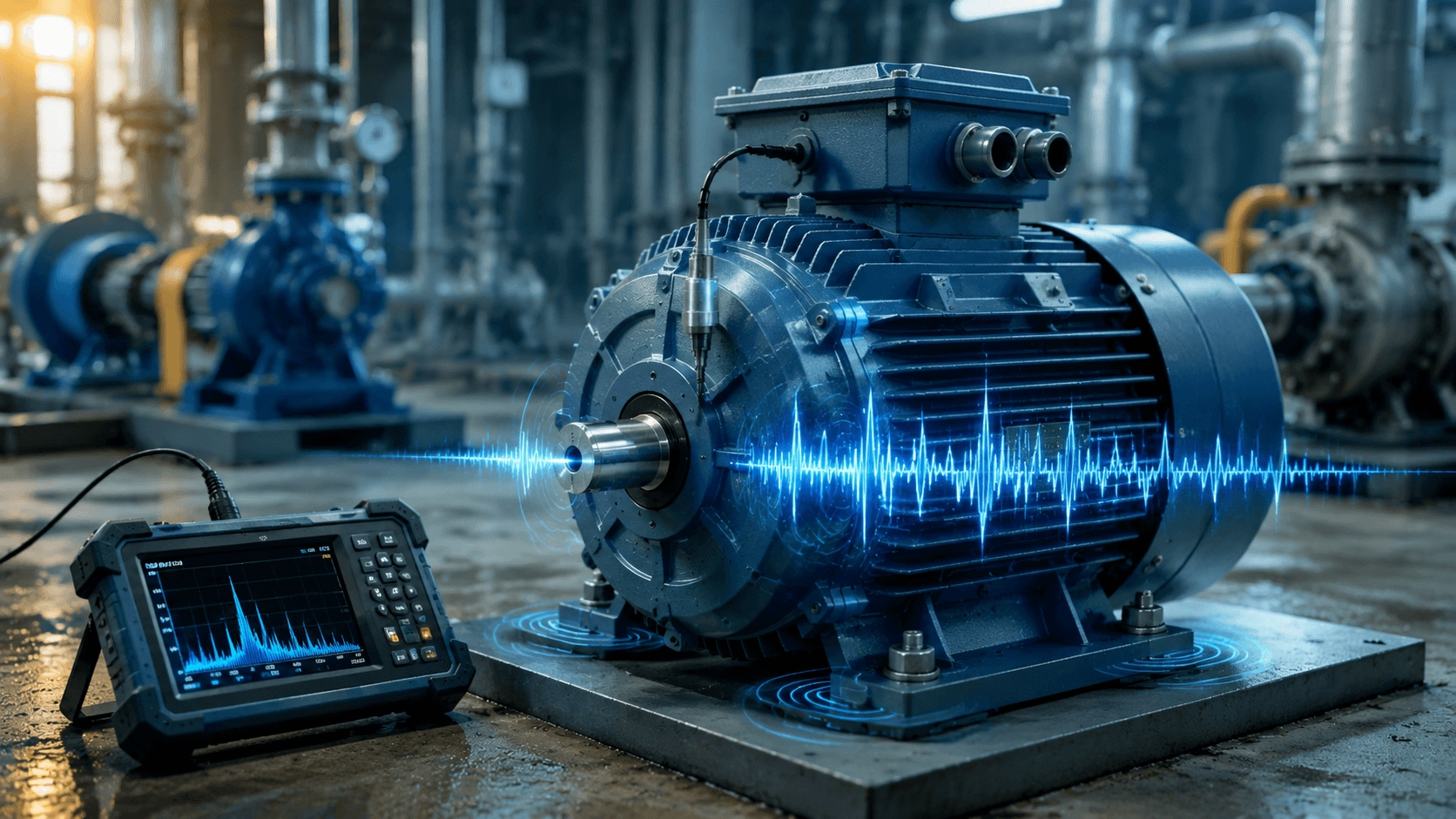
2026 Industrial Reliability Guide: A comprehensive technical analysis of abnormal vibration in three-phase AC induction motors. Covers root causes (mechanical, electrical, environmental), advanced diagnosis techniques using ISO 10816-3 standards, practical repair strategies, and predictive maintenance best practices to minimize downtime and extend asset life. Compiled with TITECHO engineering expertise.
Introduction: Vibration as the Early Warning System
Excessive or abnormal vibration in three-phase AC induction motors remains one of the leading indicators of impending failure in industrial applications. These motors power critical assets across manufacturing, water treatment, mining, oil & gas, and renewable energy sectors—including pumps, compressors, fans, conveyors, and crushers.
When vibration exceeds acceptable limits, it accelerates wear on bearings and windings, increases energy consumption, generates excessive noise, and can lead to catastrophic downtime costing thousands of dollars per hour. In 2026, with stricter reliability demands, widespread adoption of Variable Frequency Drives (VFDs), higher-efficiency IE4 motors, and IoT-enabled predictive maintenance, understanding vibration dynamics has never been more critical.
This guide explores the primary mechanical, electrical, and environmental causes of vibration, provides updated diagnostic techniques, offers practical repair methods, and outlines proactive prevention strategies to help plant engineers and reliability professionals extend motor life and minimize unplanned outages.
Normal vs. Abnormal Vibration: Understanding the Baseline
All rotating machinery produces some vibration. A healthy three-phase induction motor typically operates with smooth, low-amplitude vibration within manufacturer and international standards.
ISO 10816-3 Severity Guidelines
According to ISO 10816-3 (the widely referenced standard for industrial machines with power ratings from 15 kW to 300 kW and speeds 120–15,000 rpm), vibration severity is classified by velocity (mm/s RMS) measured on bearing housings in three directions (horizontal, vertical, and axial):
| Severity Zone | Vibration Velocity (mm/s RMS) | Action Required |
|---|---|---|
| Zone A (Good) | Up to 2.8 mm/s | New or recently overhauled machines; no action needed. |
| Zone B (Satisfactory) | 2.8 – 4.5 mm/s | Machine is acceptable for unrestricted long-term operation. |
| Zone C (Unsatisfactory) | 4.5 – 7.1 mm/s | Machine may be operated for a limited period until a suitable opportunity arises for remedial action. |
| Zone D (Unacceptable) | > 7.1 mm/s | Vibration severity is sufficient to cause damage to the machine; immediate shutdown/repair required. |
> Note: Thresholds vary slightly by machine class and foundation rigidity. Always consult specific OEM limits.
Abnormal vibration is characterized by sudden increases, irregular patterns, high amplitudes, or specific frequency peaks that correlate with mechanical or electrical faults. It is often accompanied by noise, overheating, increased current draw, or premature bearing failure.
Major Causes of Abnormal Vibration in 3-Phase Motors
Causes generally fall into three interconnected categories. Many issues compound each other—for example, electrical imbalance can accelerate mechanical wear.
1. Mechanical Causes (~60–70% of Cases)
- Rotor Imbalance: Uneven mass distribution caused by manufacturing defects, dirt/debris buildup on fans or rotors, corrosion, or broken rotor bars.
- Signature: Dominant vibration at 1× running speed (1× RPM).
- Shaft Misalignment: Parallel, angular, or combined misalignment between the motor and driven equipment (couplings, pumps, gearboxes). Laser misalignment errors are a frequent root cause in real-world installations.
- Signature: High axial vibration and peaks at 1× and 2× RPM.
- Bearing Wear or Failure: The #1 mechanical failure mode. Caused by improper lubrication (over- or under-greasing), contamination, overload, misalignment, or electrical discharge (fluting from VFDs).
- Signature: High-frequency broadband vibration or specific bearing fault frequencies (BPFO, BPFI, BSF, FTF).
- Mechanical Looseness: Loose foundation bolts, motor feet ("soft foot"), worn couplings, or cracked bases.
- Signature: Sub-synchronous vibration, harmonics, and a "rattling" feel.
- Rotor Eccentricity or Bent Shaft: Uneven air gap or shaft bow, leading to unbalanced magnetic pull.
- Signature: Vibration at 1× or 2× line frequency.
2. Electrical Causes
- Voltage or Current Unbalance: Even a 2–5% voltage imbalance can cause a 10–20% current imbalance, resulting in uneven torque, overheating, and vibration.
- Signature: Vibration at 2× line frequency (100 Hz for 50Hz systems, 120 Hz for 60Hz systems).
- Stator Winding Faults: Shorted turns, phase-to-phase shorts, or open circuits create magnetic asymmetry and pulsating forces.
- Air Gap Irregularities: Eccentric rotor/stator positioning or worn bearings leading to unbalanced magnetic pull.
- Harmonics from VFDs: Modern variable frequency drives introduce harmonics that amplify torque ripple and vibration, especially at certain speeds. Without proper output filters or dV/dt mitigation, this can significantly shorten motor life.
3. Environmental and Installation-Related Causes
- Poor Foundation or Resonance: Weak concrete bases, resonance with structural natural frequencies, or inadequate grouting amplifies existing vibration.
- External Vibration Transmission: Nearby heavy machinery (crushers, presses) transferring energy through floors or piping.
- Ambient Conditions: Extreme temperatures affecting lubricant viscosity, dust clogging cooling paths, moisture causing corrosion, or chemical exposure degrading mounts.
💡 2026 Nuance: With more IE4 premium-efficiency motors (which run cooler but can be more sensitive to harmonics) and higher VFD penetration, electrical and VFD-induced issues are rising. Early detection through continuous monitoring is now standard in many plants.
How to Diagnose Abnormal Vibration: Tools and Techniques
Effective diagnosis combines multiple methods for accurate root-cause identification:
- Visual and Sensory Inspection: Check for loose bolts, cracked welds, hot spots, oil leaks, or uneven wear.
- Vibration Analysis: Use portable analyzers, accelerometers, or online systems. Perform FFT (Fast Fourier Transform) spectrum analysis to identify dominant frequencies:
1× RPM= Imbalance2× RPM= MisalignmentHigh Frequency= Bearing defects
- Phase Analysis: Helps distinguish misalignment from imbalance.
- Electrical Signature Analysis (ESA) / MCSA: Detects rotor bar issues, winding faults, and electrical unbalance without disassembly.
- Thermal Imaging (Infrared): Identifies overheating bearings, windings, or couplings.
- Ultrasound and Oil Analysis: For early bearing wear detection.
- Trend Monitoring & IoT Sensors: Continuous wireless sensors with AI-driven alerts represent the 2026 gold standard for critical assets.
Recommended Practice: Measure vibration quarterly for general motors and monthly (or continuously) for critical equipment. Compare against ISO 10816-3 severity charts and historical baselines.
Repair and Correction Strategies
Address the root cause rather than just the symptoms:
| Issue | Correction Strategy |
|---|---|
| Imbalance | Clean rotor/fan and perform dynamic balancing (shop or field). |
| Misalignment | Use laser alignment tools for precision (target <0.1 mm offset). Install flexible couplings where appropriate. |
| Bearing Issues | Replace with correct type and preload; follow precise lubrication schedules. Consider insulated bearings for VFD applications to prevent fluting. |
| Looseness | Tighten all fasteners to spec; repair or re-grout foundations; shim "soft foot" conditions. |
| Electrical Problems | Correct voltage unbalance, tighten connections, rewind or replace damaged stator, install line reactors or sine-wave filters on VFDs. |
| Foundation/Environmental | Reinforce base with vibration isolators, dampers, or epoxy grouting; improve ventilation and sealing (e.g., IP55+ enclosures). |
Always re-test vibration levels after repairs to verify success.
Preventive Maintenance and Best Practices for 2026
- Implement Predictive Maintenance (PdM): Use vibration, thermography, and ESA to detect issues before failure.
- Schedule Precision Alignment: Perform regular laser alignment and balancing during planned outages.
- Optimize Lubrication: Follow manufacturer guidelines strictly and use condition-based (not just time-based) greasing where possible.
- Mitigate VFD Effects: Install VFD output filters and shaft grounding brushes on drive-duty motors.
- Upgrade to IE4: Use high-quality IE4 motors with robust construction for new installations.
- Train Technicians: Ensure staff are trained on ISO 10816 interpretation and basic spectrum analysis.
- Deploy IoT Sensors: Use wireless vibration sensors for remote monitoring and AI anomaly detection.
Real-World Case Studies
- Water Treatment Pump Motor: High axial vibration was traced to coupling misalignment. Laser realignment reduced levels from 8.2 mm/s to 1.9 mm/s, extending bearing life by over 3 years.
- Cement Plant Fan Motor: Rotor imbalance caused by dust buildup. Cleaning + dynamic balancing eliminated the 1× RPM peak and prevented imminent bearing failure.
- Manufacturing Line with VFD: Harmonic-induced vibration at variable speeds. Adding sine-wave filters and insulated bearings resolved the issue across 12 motors, reducing noise and heat.
Troubleshooting Checklist for Abnormal Vibration
✅ Stop safely and perform visual inspection.
✅ Measure overall vibration levels in three directions and compare to ISO 10816-3.
✅ Collect FFT spectrum data to identify dominant frequencies.
✅ Check power supply for voltage/current balance.
✅ Inspect alignment, couplings, and foundation.
✅ Analyze bearings (temperature, ultrasound, lubrication).
✅ Apply targeted repairs and re-measure.
✅ Establish ongoing trend monitoring.
FAQ: Abnormal Vibration in Three-Phase Motors
Q: What is the acceptable vibration level for a 3-phase motor?
A: Generally, below 2.8 mm/s RMS is good, and below 4.5 mm/s RMS is satisfactory for most industrial motors per ISO 10816-3.
Q: Can VFDs cause more vibration?
A: Yes. VFDs can introduce harmonic torque ripple and shaft voltages that cause bearing fluting. Proper filtering and grounding mitigate this.
Q: How often should vibration analysis be performed?
A: Quarterly for standard motors; monthly or continuously (via IoT) for critical assets.
Q: Is high vibration always a mechanical problem?
A: No. Electrical issues like voltage unbalance or winding faults can also cause significant vibration.
Q: What is the fastest way to reduce vibration?
A: Identify the root cause via spectrum analysis. Often, correcting alignment or balancing provides the quickest relief.
Conclusion: Turn Vibration from a Problem into a Predictor
Abnormal vibration in three-phase induction motors is rarely random—it is an early warning system that, when properly interpreted, allows maintenance teams to intervene before minor issues become major failures. By combining root-cause analysis, modern diagnostic tools, targeted repairs, and proactive monitoring programs, plants can significantly extend motor service life, reduce energy costs, improve safety, and boost overall equipment effectiveness (OEE).
In 2026’s reliability-focused industrial landscape, investing in vibration knowledge and predictive technologies is no longer optional—it is a competitive advantage. Start by auditing your critical motors today: measure baseline vibration, review recent trends, and build a prioritized action plan.
If you are experiencing abnormal vibration in your three-phase motors or need assistance selecting the right diagnostic tools, high-efficiency replacements, or VFD-compatible solutions, feel free to reach out for expert guidance. Early action today prevents expensive downtime tomorrow.
Get a Free Custom Quote for Copper Motors
Choose TITECHO's 99.99% pure copper winding motors for lower operational costs, longer equipment life, and compliance with 2026 energy regulations. Our team responds within 24 hours!
- ✉️ Email: [email protected]
TITECHO – TECHO ELECTRICAL & MECHANICAL (TAIZHOU) CO., LTD
Taizhou City, Zhejiang, China | www.cntecho.com