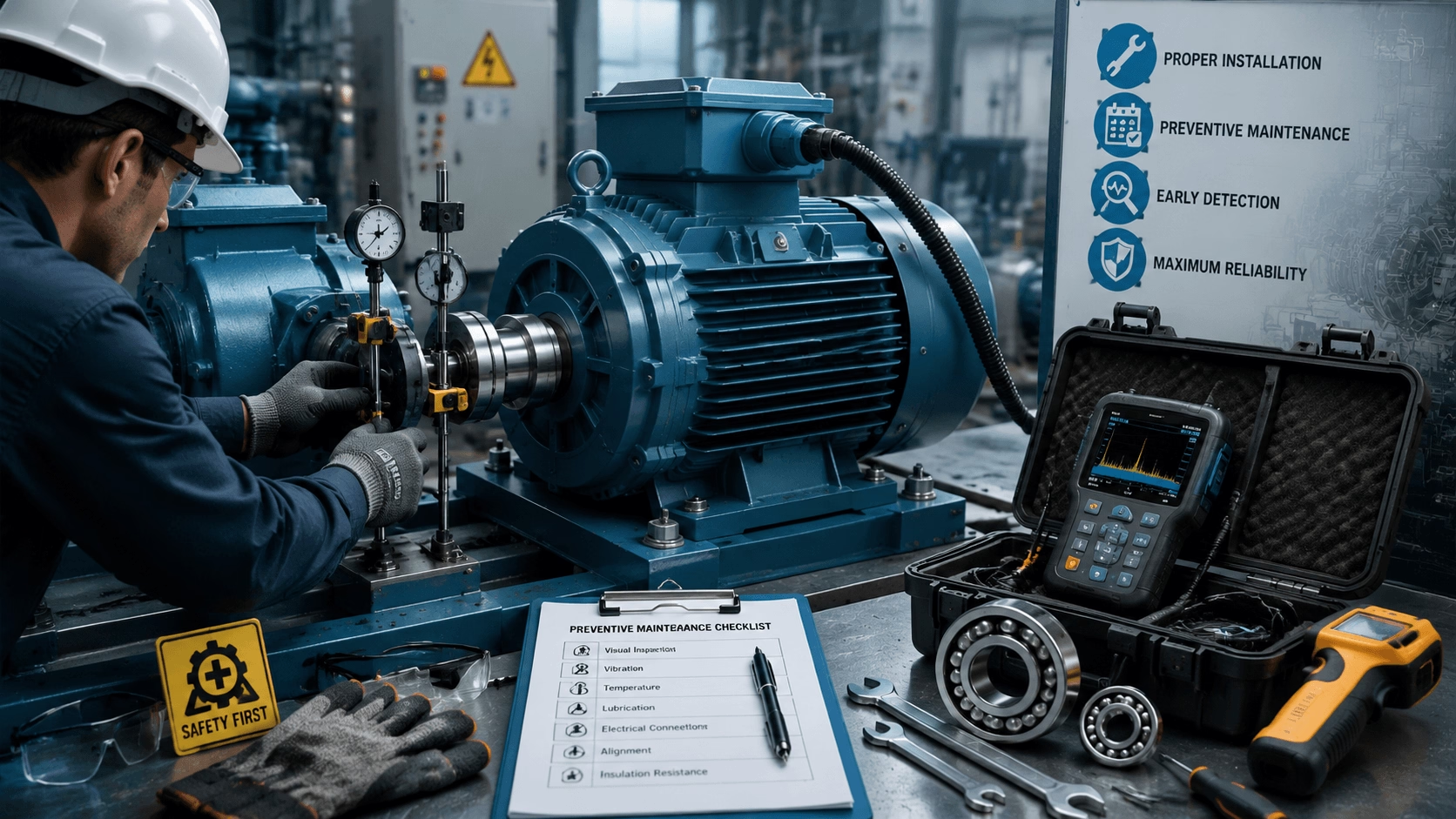
A comprehensive guide to motor installation, preventive maintenance, and troubleshooting. Learn proper installation procedures, maintenance schedules, and diagnostic methodologies for common motor issues. Expert advice from Titecho.
1. Introduction
Proper installation and rigorous maintenance protocols are essential for maximising the service life and operational reliability of electric motors. Industry studies indicate that approximately 50% of motor failures originate from improper installation, inadequate maintenance, or adverse operational conditions, rather than inherent manufacturing defects. This guide delineates the best practices for installation, outlines structured preventive maintenance schedules, and provides systematic troubleshooting methodologies.
2. Motor Installation Best Practices
2.1 Pre-Installation Checks
Prior to installation, a thorough inspection must be conducted. This includes verifying the absence of shipping damage, confirming that the nameplate data aligns with application requirements, checking free shaft rotation, and ensuring proper storage conditions if immediate installation is not feasible.
2.2 Foundation and Mounting
Motors must be mounted on rigid, level foundations to prevent structural resonance and misalignment.
- Utilise precision shims to achieve a level tolerance of ≤ 0.05 mm/m.
- Tighten mounting bolts in a diagonal, cross-pattern sequence to ensure even load distribution.
- Re-torque the bolts after 24 hours of operation to account for initial settling and thermal expansion.
2.3 Shaft Alignment
Misalignment is a primary cause of bearing degradation, excessive vibration, and premature mechanical failure. Alignment deviations generally manifest as parallel offset, angular misalignment, or a combination of both. The permissible tolerances are strictly dependent on the motor's operating speed.
| Operating Speed (RPM) | Maximum Parallel Offset (mm) | Maximum Angular Misalignment (mm / 100 mm) |
|---|---|---|
| < 1,000 | 0.15 | 0.20 |
| 1,000 – 2,000 | 0.10 | 0.15 |
| 2,000 – 3,000 | 0.05 | 0.10 |
| > 3,000 | 0.03 | 0.05 |
2.4 Electrical Connections
Electrical installation must comply with stringent safety and performance standards:
- Verify that the supply voltage, phase sequence, and frequency correspond precisely with the motor nameplate specifications.
- Select the appropriate conductor cross-section and apply the correct torque to all terminal connections.
- Establish a reliable, dedicated grounding system; reliance on the conduit for grounding is strictly prohibited.
- Install requisite overload protection, disconnect switches, and appropriate motor control circuitry.
3. Preventive Maintenance Programme
A structured preventive maintenance schedule is critical for the early detection of anomalies and the preservation of motor integrity.
| Frequency | Maintenance Activities |
|---|---|
| Daily | Visual inspection, acoustic monitoring, vibration assessment, and current draw verification. |
| Weekly | Measurement of bearing temperatures, detailed vibration analysis, and lubrication level checks. |
| Monthly | Inspection of electrical connections, verification of voltage balance, and re-evaluation of shaft alignment. |
| Quarterly | Insulation resistance testing, detailed bearing inspection, and scheduled lubrication service. |
| Annual | Comprehensive teardown inspection, internal cleaning, full performance testing, and historical record review. |
4. Lubrication Guidelines
Proper lubrication is paramount for bearing longevity. The regreasing interval is directly correlated with the motor's daily operating hours.
| Daily Operating Hours | Recommended Regreasing Interval |
|---|---|
| < 8 hours | 12 months |
| 8 – 16 hours | 6 months |
| 16 – 24 hours | 3 months |
| Continuous (24/7) | 1 – 2 months |
Best Practices for Lubrication:
- Exclusively utilise the grease formulation recommended by the motor manufacturer.
- Fill the bearing cavity to 30–50% of its total volume; over-greasing induces excessive churning and thermal runaway.
- For oil-lubricated motors, strictly maintain the prescribed oil level and execute oil changes every 2,000 to 8,000 operating hours, contingent upon the operational environment.
5. Common Motor Problems & Troubleshooting
Systematic diagnosis is required to identify the root cause of operational anomalies.
- Motor Fails to Start: Investigate power supply continuity, tripped overload relays, voltage deficits, mechanical binding in the driven load, or internal winding faults.
- Excessive Overheating: Assess for mechanical overloading, inadequate ventilation, high ambient temperatures, supply voltage imbalance, or incipient bearing failure.
- Excessive Vibration: Evaluate shaft alignment, rotor dynamic unbalance, bearing wear, loose mounting hardware, or electrical asymmetries (e.g., rotor bar defects).
- Unusual Acoustic Emissions:
- Grinding: Indicative of severe bearing degradation.
- Rattling: Suggests loose internal or external components.
- Squealing: Points to inadequate lubrication.
- Humming: Often associated with voltage imbalance or single-phasing conditions.
6. Motor Failure Analysis
Understanding the statistical distribution of motor failures aids in prioritising maintenance efforts:
- Bearing Failure (50–60%): Predominantly caused by inadequate lubrication, particulate contamination, or chronic misalignment.
- Winding Failure (30–40%): Typically the result of thermal degradation (overheating), voltage transients, dielectric breakdown, or environmental contamination.
- Rotor and Miscellaneous Failures: Generally attributed to mechanical stress, operational abuse, or severe environmental damage.
7. Storage, Preservation, and Safety
7.1 Storage Protocols
- Short-Term Storage: Maintain the motor in a clean, dry environment. Manually rotate the shaft monthly to prevent false brinelling of the bearings, and energise internal space heaters to prevent condensation.
- Long-Term Storage: Apply a vapour barrier and desiccants. Treat machined surfaces with approved preservatives and conduct rigorous quarterly inspections.
7.2 Safety Standards
All maintenance and installation activities must strictly adhere to industrial safety protocols:
- Implement rigorous Lockout/Tagout (LOTO) procedures.
- Mandate the use of appropriate Personal Protective Equipment (PPE).
- Ensure that only qualified and certified personnel perform electrical and mechanical interventions.
- Conduct zero-energy verification prior to commencing any physical work.
8. Conclusion
Meticulous installation and a rigorous preventive maintenance regime significantly extend motor service life, mitigate catastrophic failures, and reduce overall operating expenditures. Proactive maintenance is invariably more cost-effective than reactive, emergency repairs.
At Titecho, our technical engineering team provides comprehensive support for installation supervision, maintenance programme development, and advanced troubleshooting, ensuring you achieve maximum motor performance and operational reliability.
© Titecho – Driving Efficiency and Reliability in Every Rotation