Premium Efficiency AC Motors: IE4 & IE5 Compliance & Engineering Guide | TITECHO
Abstract: A comprehensive technical guide to premium efficiency AC motors, analyzing IE4/IE5 standards, construction methodologies, maintenance protocols, and Total Cost of Ownership (TCO). TITECHO provides certified, high-performance industrial motor solutions designed for modern energy landscapes.
1. Introduction: The Shift Towards Energy Efficiency
In the contemporary industrial sector, electric motors account for approximately 70% of total industrial electricity consumption. As global energy costs escalate and environmental regulations become increasingly stringent, the demand for Premium Efficiency (PE) motors has intensified.
This guide examines the engineering principles underlying high-efficiency AC motors, outlines the global regulatory landscape, and demonstrates how partnering with a certified manufacturer like TITECHO can optimize operational performance and long-term cost efficiency.
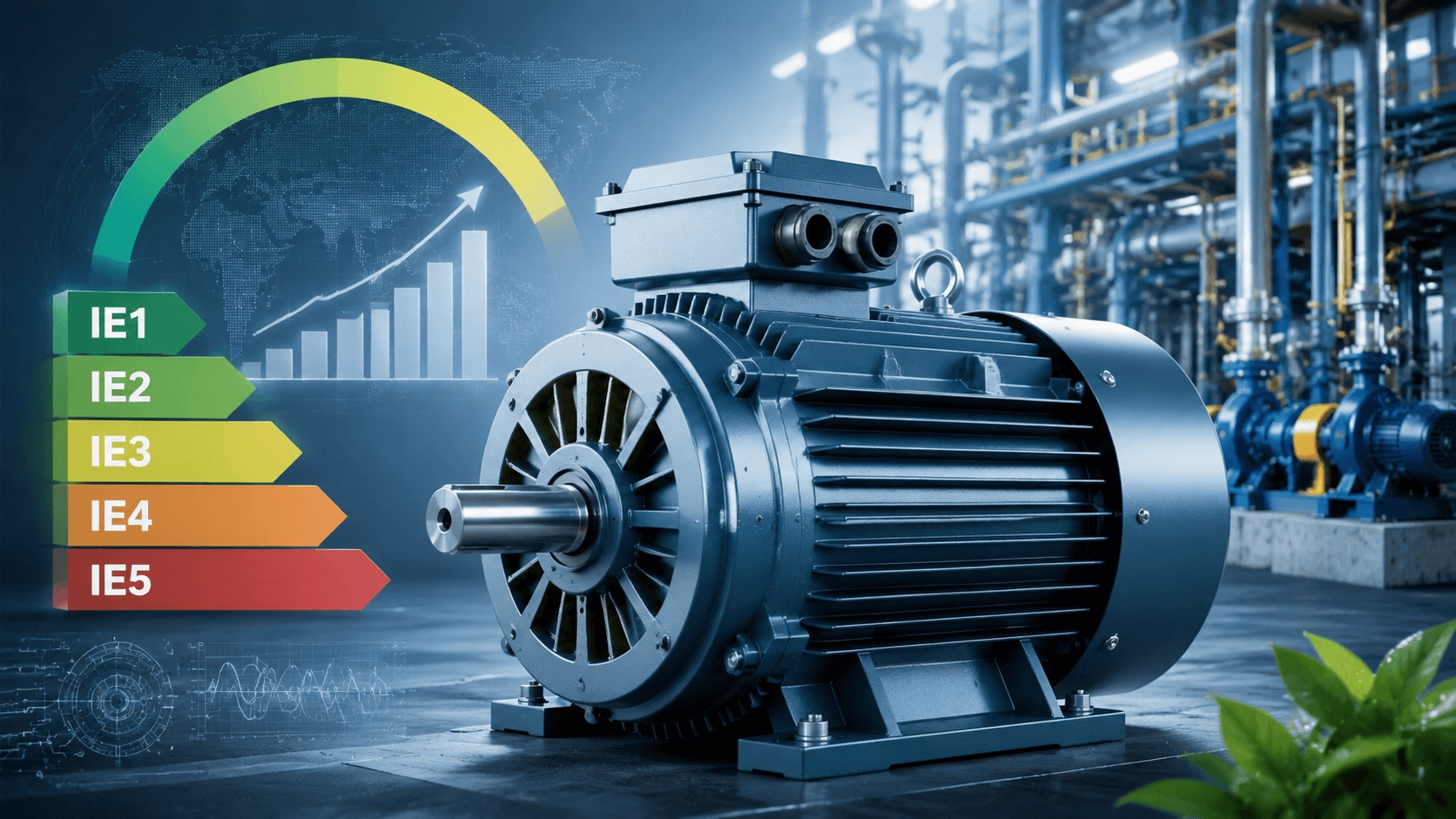
2. International Efficiency Standards (IEC 60034-30-1)
The IEC 60034-30-1 standard classifies motor efficiency into distinct categories. Understanding these classes is essential for regulatory compliance and strategic asset planning.
| IE Class | Rating | Application & Policy Status |
|---|---|---|
| IE1 | Standard Efficiency | Being phased out globally |
| IE2 | High Efficiency | Minimum standard in most markets |
| IE3 | Premium Efficiency | Mandatory in EU, North America, and other key regions |
| IE4 | Super Premium | Top-tier industrial performance; increasingly specified |
| IE5 | Ultra Premium | Future standard; requires advanced high-tech design |
TITECHO manufactures motors fully compliant with IE3 and IE4 standards, ensuring facilities meet current regulations while remaining future-proofed against upcoming energy legislation.
3. Key Engineering Enhancements in Premium Motors
Achieving higher efficiency classes requires precise engineering interventions across multiple subsystems.
3.1 Core Material Optimization
Premium efficiency motors utilize low-loss silicon steel laminations to significantly reduce hysteresis and eddy current losses. This optimization improves efficiency at both full and partial load conditions.
3.2 Copper Winding Technology
Larger cross-section copper windings reduce electrical resistance and I²R losses. TITECHO employs automated winding processes to maximize slot fill factor, thereby enhancing thermal conductivity and overall efficiency.
3.3 Aerodynamic Design
High-efficiency cooling fans are engineered to minimize windage losses while maintaining robust thermal dissipation. This balance directly contributes to achieving superior IE efficiency ratings without compromising temperature rise limits.
3.4 Premium Bearing & Sealing Systems
Integration of top-quality bearings (e.g., SKF, NSK, or equivalent) combined with advanced sealing technologies ensures reliability, extended service life, and resilience in harsh industrial environments.
4. Total Cost of Ownership (TCO) Analysis
Over a typical 10-year motor lifespan, energy consumption overwhelmingly dominates total expenses. Initial purchase price represents a minor fraction of lifecycle costs.
| Cost Component | Share of TCO |
|---|---|
| Initial Purchase Price | ~3% |
| Maintenance & Repair | ~2% |
| Energy Consumption | ~95% |
Financial Implication: Upgrading from IE3 to IE4 typically incurs a 15–20% increase in upfront capital expenditure but delivers a payback period of under two years through sustained energy savings.
5. VFD Compatibility
Premium efficiency motors must be engineered specifically for Variable Frequency Drive (VFD) operation to prevent premature failure:
- Enhanced Insulation: Class F or H insulation systems protect against voltage spikes and dv/dt stresses inherent to VFD output.
- Shaft Grounding: Insulated bearings or shaft grounding rings are utilized to prevent Electrical Discharge Machining (EDM) damage caused by induced shaft currents.
- Wide Speed Range: Motors are designed for stable constant-torque performance across a broad speed spectrum without overheating.
6. Maintenance Best Practices
Adhering to rigorous maintenance protocols preserves efficiency and extends asset life:
- Follow manufacturer specifications for bearing lubrication intervals and grease types.
- Implement periodic vibration analysis to detect misalignment, imbalance, or bearing wear.
- Utilize thermal imaging to identify hot spots in windings, connections, and stator cores.
- Maintain cleanliness of fans and cooling fins to preserve designed heat dissipation capacity.
7. Future Trends: Smart Motors & IoT Integration
TITECHO is actively integrating Industry 4.0 capabilities into its motor platforms:
- Embedded Sensors: Real-time monitoring of temperature, vibration, and load parameters.
- IoT Connectivity: Enables remote diagnostics and predictive maintenance workflows.
- Data Analytics: Leverages operational data to further optimize energy usage and system performance.
8. Conclusion
Transitioning to premium efficiency AC motors represents a strategic investment in both profitability and sustainability. Through strict adherence to IEC standards, advanced engineering design, and a focus on total lifecycle cost reduction, TITECHO supports industrial operations worldwide.
For technical datasheets, CAD drawings, or a customized TCO analysis, please contact our engineering team at [email protected] or visit www.cntecho.com.